
LLC Formation
LLC Tax Classification: Find Your Federal Starting Point
LLC tax classification determines how the IRS treats an LLC for federal tax purposes. A domestic LLC with one owner is generally disregarded for income tax unless it elects corporate treatment. A domestic LLC with two or more owners generally defaults to partnership treatment. The legal entity remains an LLC under state law.
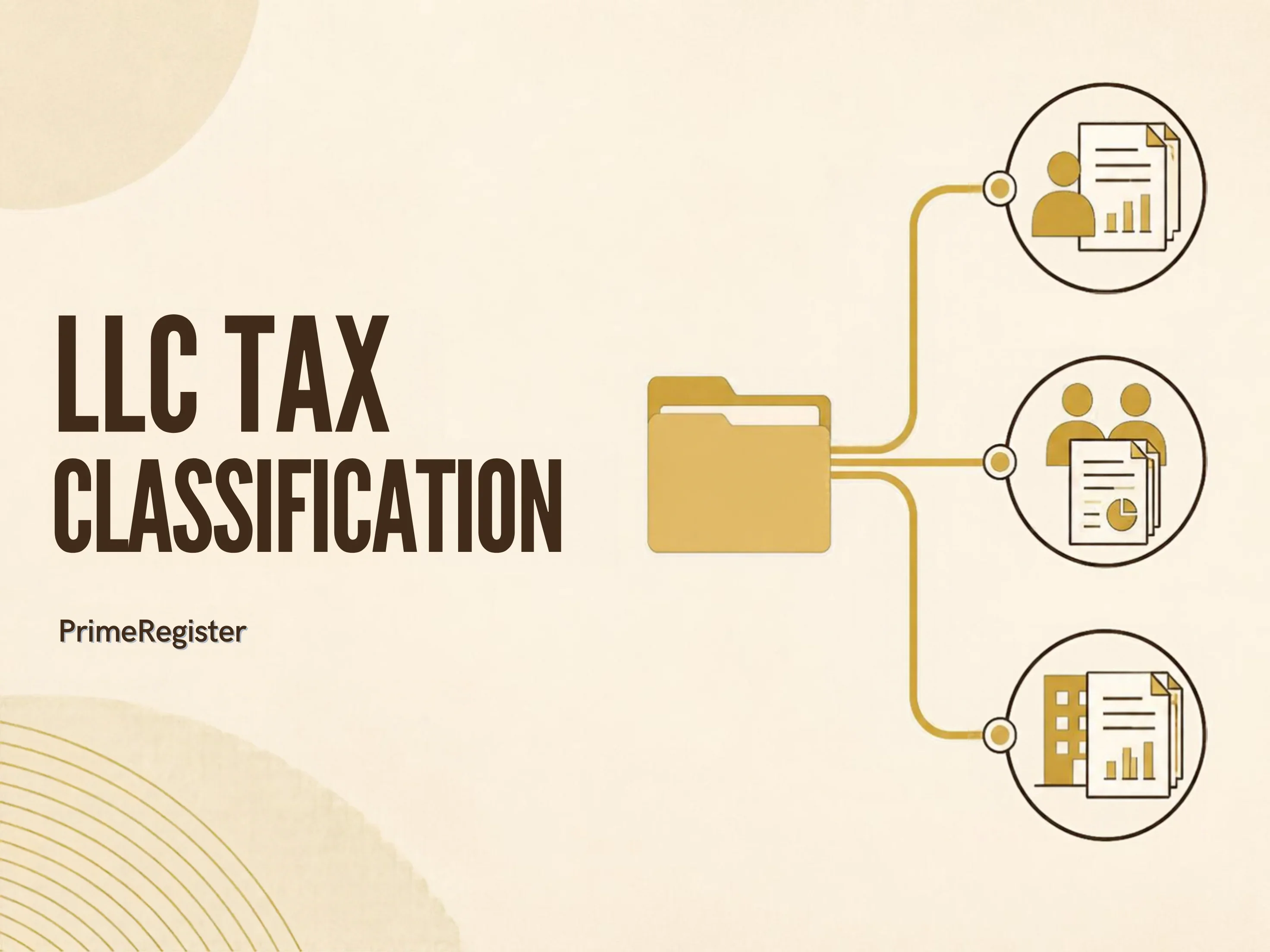
LLC tax classification determines how the IRS treats an LLC for federal tax purposes. A domestic LLC with one owner is generally disregarded for income tax unless it elects corporate treatment. A domestic LLC with two or more owners generally defaults to partnership treatment. The legal entity remains an LLC under state law.
These default rules are summarized in the IRS entity guidance. They are a starting point, not a conclusion that the owner owes no tax or has no filing obligations. Special situations, including certain married-owner arrangements, need separate analysis.
LLC tax classification: the main routes
| Starting position | General federal income-tax treatment | What to investigate next |
|---|---|---|
| One owner, no corporate election | Disregarded entity | Owner's return and any separate information filings |
| Two or more owners, no corporate election | Partnership | Form 1065, partner reporting and possible withholding |
| Eligible LLC elects corporate treatment | Corporation | Corporate return, owner payments and distributions |
| Eligible entity elects S status | S corporation | Eligibility restrictions, election requirements and payroll |
The IRS LLC tax publication explains these routes and the relationship between default classification and elections. Do not choose a tax status solely because a social media post promises lower tax.
Disregarded does not mean invisible
A disregarded LLC is generally not separate from its owner for federal income tax. However, separate rules can apply for employment taxes, excise taxes and information reporting.
A wholly foreign-owned US disregarded entity may need Form 5472 with a pro forma Form 1120 when it has reportable transactions. Owner funding and withdrawals can matter. See the foreign-owned LLC reporting guide, rather than assuming that no sales means no return.
The owner's home country may classify or tax the LLC differently. US treatment alone does not settle tax residence, treaty eligibility or foreign reporting.
More owners can change the filing path
Adding a second owner can move a disregarded LLC into partnership treatment unless another rule or election applies. That may introduce partner schedules, allocation decisions and foreign-partner withholding questions.
Review the effective date before transferring money or signing the admission document. Our single-member versus multi-member comparison explains the governance decisions, while the foreign-partner tax guide covers the separate filing assessment.
An election is a deliberate tax decision
Form 8832 allows eligible entities to elect a classification. S corporation treatment has separate rules and generally cannot include nonresident alien shareholders. An LLC does not become an eligible S corporation merely because its owner has an EIN or US mailing address.
Read the Form 8832 guide before discussing an election with a qualified preparer. Ask about the effective date, any deemed transactions, state treatment and consequences in the owner's home country.
Create a one-page classification record
Record the formation jurisdiction, owner count, each owner's tax residence, ownership changes and copies of any elections or IRS acceptance correspondence. Give this record to the preparer each year and update it after a change.
If you are still planning the entity, contact PrimeRegister to discuss formation administration. Use a qualified cross-border tax adviser for the classification and filing decisions that depend on your personal facts.