Business Expansion
North Carolina Foreign LLC Registration Guide
Prepare the application, supporting certificate and agent details for an existing LLC entering North Carolina.

North Carolina foreign LLC registration allows an LLC formed elsewhere to obtain authority to do business in North Carolina when its activities require it. The standard application is Form L-09, and the filing fee is $250.
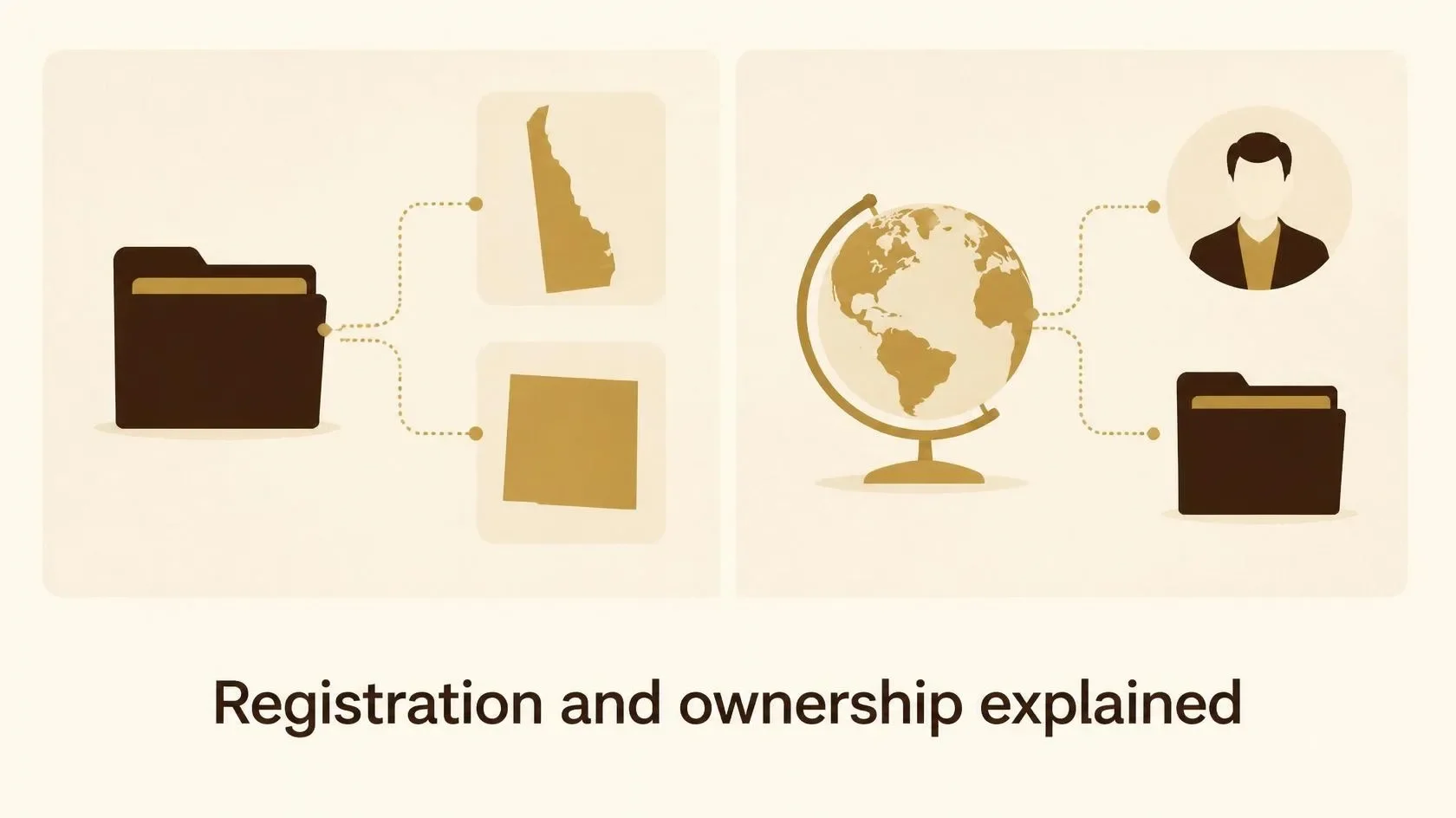
The application concerns the company's formation jurisdiction, not the owner's nationality. A Delaware LLC owned by a US resident and a Delaware LLC owned by someone overseas both approach North Carolina as entities formed outside the state.
Checked 7 October 2026. This guide covers ordinary foreign LLC registration; professional and other specialized entities may have additional requirements.
North Carolina foreign LLC registration requirements
The Secretary of State requires an application for a certificate of authority and a certificate of existence or comparable document from the home jurisdiction. The certificate must be no more than six months old. Official registration requirements.
Prepare these items before submitting:
| Item | Preparation task |
|---|---|
| Existing LLC record | Confirm the legal name, formation jurisdiction and status |
| Form L-09 | Use the current application and complete every applicable field |
| Certificate of existence | Order from the home jurisdiction within the accepted age window |
| North Carolina registered agent | Confirm eligibility, agreement to serve and required address information |
| Company addresses | Distinguish principal, mailing and registered-office addresses |
| Filing fee | Budget $250, plus any separately selected service or processing costs |
The fee is also listed in the Secretary of State's fee schedule. A private agent subscription and the cost of obtaining the home-jurisdiction certificate are separate budget items.
Decide whether registration is needed before filing
An office, employees or continuing local operations are reasons to review the qualification rules. Do not make the decision solely from a customer's location or the fact that your website is available in North Carolina.
Write a short description of the planned activities and their start date. Include who will work in the state, what property will be held there and how the business will serve customers. Ask for a state-specific assessment if the answer is unclear.
Registration, tax accounts and licensing are separate checks. A certificate of authority does not establish that every profession or activity is licensed. The state's requirements specifically identify additional considerations for professional services under Chapter 55B.
Step 1: check the existing company record
Review the LLC's approved formation document and amendments. Use the same legal name and jurisdiction throughout the application and supporting certificate. If the company changed its name, make sure you are using the current record.
Check the proposed North Carolina name through the state's official resources. If it is unavailable or does not meet the requirements, investigate the permitted alternate-name procedure before preparing inconsistent documents.
Do not create a second LLC simply because the name search is inconvenient. A new entity creates different ownership, contract, accounting and tax questions from registering the existing one.
Step 2: arrange the registered agent
The LLC needs a registered agent and a registered office meeting North Carolina's requirements. Confirm the physical address and the exact name the agent authorizes you to use.
Treat the agent's role as receiving legal notices. Do not automatically use that address for every business purpose. A bank, tax agency or commercial customer may ask for the actual location from which the company operates.
If you use a provider, ask about the renewal price and how notices reach you overseas. A low first-year price is not enough if important correspondence will sit in an unmonitored account.
Step 3: obtain the supporting certificate
Request the certificate from the government authority responsible for the company's home record. A formation document downloaded when the LLC was created is not necessarily the certificate of current existence the application requires.
Check the issue date before sending the package. If preparation has taken several months, confirm that the certificate is still within the six-month limit on submission.
Keep the original digital file or a clear copy with the application. This makes it easier to resolve a request for clarification without ordering the same document again unnecessarily.
Step 4: submit the current application
Use the Secretary of State's foreign-business registration guidance to access the current filing route and Form L-09. Review the company's name, addresses, agent and authorized signature before paying.
Follow the current submission instructions for the route you choose. Do not rely on a processing-time promise from an old blog; workload, delivery method and document corrections can affect approval.
Keep the submitted application, payment confirmation and accepted certificate of authority together. A receipt for payment and an approved registration are separate milestones.
What happens after approval?
Add North Carolina to the company's compliance calendar. Continue maintaining the LLC in its home jurisdiction as well. Registering in North Carolina does not move or replace the original entity.
North Carolina LLC annual reports generally have an April 15 deadline. The base report fee is $200, with an electronic transaction fee for online payments. The state currently lists an additional $3 for credit-card payment or $2 for ACH. Annual-report due dates and fees.
For an existing foreign LLC, confirm the first reporting year assigned to its North Carolina record. Do not guess solely from the original formation date or assume a full year automatically follows registration.
Also review tax registration, payroll and any local or professional license requirements triggered by the actual operations. Assign someone to check notices even when the founder manages the company from another country.
Budget for entry and ongoing maintenance
Keep these categories separate: the $250 application, the home certificate, North Carolina registered agent service, annual reports and activity-specific tax or license work.
For example, a company entering North Carolina may already pay an agent in its formation state. That existing contract does not automatically include a North Carolina agent or the annual report. Ask what each provider actually covers.
If operations later stop in North Carolina, review withdrawal and account closure. Simply canceling the local agent subscription does not document the end of the state's registration or tax accounts.
Discuss your planned expansion
Contact PrimeRegister with the LLC's formation jurisdiction, proposed North Carolina activities and desired start date. We can confirm whether assistance is available and what the quoted work includes.
The first goal is a clear scope: qualification assessment where needed, correct documents and a practical plan for the obligations after approval.