Tax and Compliance
Sales Tax for Non-Resident LLC Owners: Ecommerce Guide
Sales tax for non-resident LLC owners depends on the business's activity and connection to each jurisdiction, not simply the owner's location.
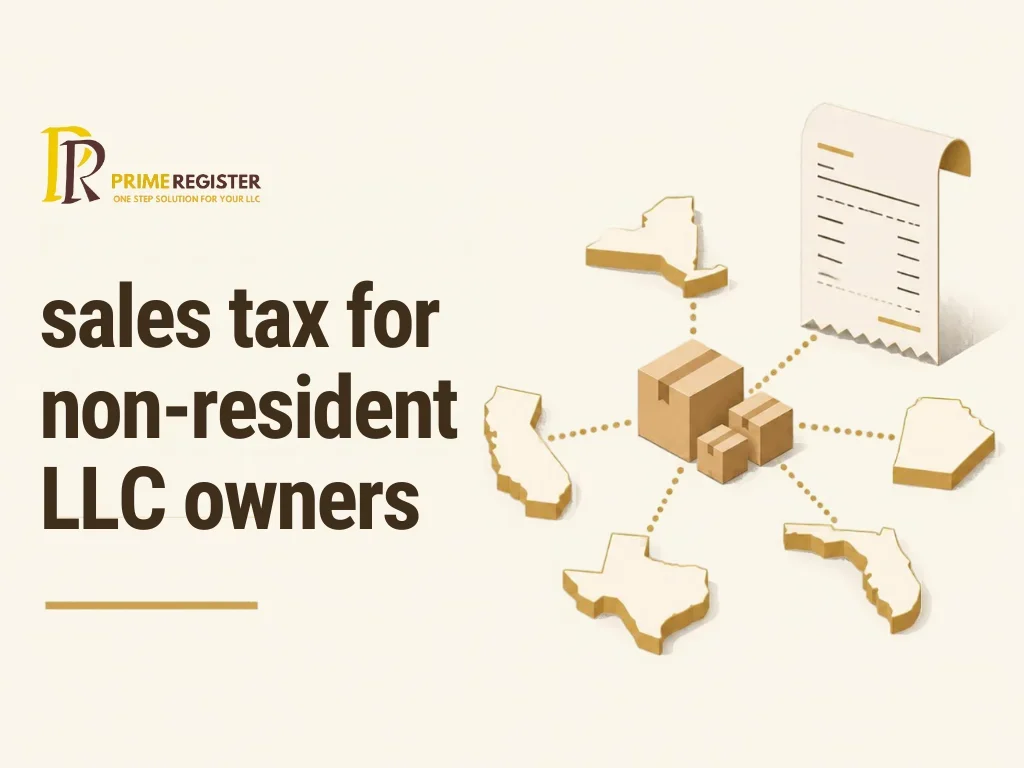
Sales tax for non-resident LLC owners depends on the business's activity and connection to each jurisdiction, not simply the owner's location. Selling through a US LLC does not create one nationwide sales-tax permit or a single threshold that applies everywhere.
An ecommerce founder needs a state-by-state assessment of physical activity, sales, product taxability and marketplace treatment.
Sales tax for non-resident LLC owners: four questions
| Question | Information to collect |
|---|---|
| Where is the business physically active? | Offices, employees, inventory and fulfillment locations |
| Where are customers located? | Sales by destination state and period |
| What is being sold? | Products, services, digital items and exemptions |
| Who collects tax? | Direct store, marketplace or other selling channel |
Do not use the registered-agent state as the only state in the analysis. Inventory held by a fulfillment provider can be relevant even when the owner never visits the United States.
Distinguish physical and economic connections
Physical presence and economic nexus are different routes to an obligation. A sales threshold is not necessarily a safe harbor for a business with a separate physical connection.
State definitions, measurement periods and included sales differ. The Streamlined Sales Tax state guidance directory links to jurisdiction-specific information; use the destination state's current instructions for the actual conclusion.
Avoid a spreadsheet that applies one threshold to all states. Record the source, review date and rule used for each state where activity warrants assessment.
A state example: Texas
Texas's remote-seller guidance discusses a $500,000 safe-harbor threshold and the preceding 12-calendar-month measurement period. It also addresses marketplace activity and inventory circumstances. Read the Comptroller's remote-seller FAQs alongside its engaged-in-business guidance.
This Texas example is not a rule for California, Florida or another state. Even within one state, the analysis must account for the actual sales channel and activity.
For the separate franchise and federal reporting questions, see Texas LLC tax filing requirements; those obligations are not settled by a sales-tax permit.
Marketplace collection does not answer every question
A marketplace may collect and remit tax on covered marketplace sales. That does not automatically resolve your direct website sales, registration status or all reporting obligations.
Keep the marketplace's tax reports and any required certification. Separate marketplace sales from direct sales in your records so the preparer can apply the state's rules correctly.
For an illustrative seller using both a marketplace and its own website, a statement showing marketplace tax collection does not prove the independent store is configured correctly.
The platform-reconciliation section of bookkeeping for foreign-owned LLCs helps preserve the detail behind net payouts.
Register and configure before collecting where required
Once an obligation is identified, determine the correct registration process and effective date. Configure tax collection using accurate products, locations and customer information.
A permit application, a resale certificate and a sales-tax return serve different purposes. Do not send a resale certificate to every vendor without checking eligibility and the purchase's intended use.
If you discover historical exposure, obtain advice on the appropriate correction or disclosure process rather than simply turning on future collection and ignoring earlier periods.
Read LLC vs business license to keep tax permits distinct from other activity or location permissions.
Build a manageable monthly review
Export sales by state and channel, track inventory locations, and record new staff or facilities. Review states approaching applicable thresholds and any changes in product offerings.
Calendar the assigned filing frequency after registration. Do not assume no sales automatically means no return when an active account has a filing requirement.
Keep tax collected separate from revenue in the bookkeeping and reconcile filed amounts to the sales records.
PrimeRegister offers sales-tax permit and resale-certificate guidance within its service scope; ongoing returns may require a separate engagement. Contact PrimeRegister with your channels, products, inventory locations and state sales totals to define the work.