
LLC Formation
How to Form a US LLC as a Non-Resident
A practical formation roadmap for international founders, from choosing a state and registered agent to building records and a compliance calendar.

A non-US resident can generally own a US LLC, but forming the company is only the first part of the process. You also need to choose a suitable state, arrange a registered agent, establish company records, obtain any required tax identification and understand the filings that continue after registration.
For a founder operating internationally, the useful question is not simply “Can I register?” It is “Will this structure work for my business, my banking needs and my tax position in both countries?”
Checked 5 October 2026. General information; ownership, licensing and tax requirements depend on your circumstances.
Who can own a US LLC?
LLC ownership rules are set by the states. The IRS explains that most states allow individuals, corporations, other LLCs and foreign entities to be members, with restrictions for certain types of businesses. A domestic single-member LLC is generally disregarded for federal income tax purposes unless it elects otherwise; a domestic LLC with two or more members is generally treated as a partnership unless it elects corporate treatment. IRS LLC overview.
“Disregarded” is a tax-classification term. It does not mean the company can ignore records, information returns or state maintenance.
Before proceeding, write down who will own the LLC, where each owner is tax-resident, what you sell, where work happens and whether you plan to hire, hold inventory or raise investment. These facts are more useful than a generic recommendation to choose the most popular state.
Step 1: check whether an LLC fits your business
A US LLC may be worth considering when you need a US legal entity for commercial reasons. However, incorporation alone does not make a restricted business acceptable to a bank or platform.
Check the requirements of the providers you actually want to use before paying formation fees. Ask whether they support your country, owners and business activity, and what evidence of address and operations they require. Treat this as eligibility research, not a promise of future approval.
Also ask an adviser in your home jurisdiction how that country treats a US LLC. A classification that works one way in the United States can produce different reporting or tax results elsewhere.
Step 2: choose the state based on your operations
Start with where the business will actually operate. A business with a physical operation in one state may need registration there even if it forms elsewhere. Registering in an additional state is often called foreign qualification; in that context, “foreign” can simply mean formed in another US state. SBA business registration guidance.
If you work entirely from outside the US, compare state fees, annual obligations, registered-agent costs and any commercial reason to choose a particular jurisdiction. Wyoming and Delaware are common comparisons, but neither is automatically best for every international founder.
Build a short decision note: “We chose this state because…” If your only reason is a social media claim that it guarantees tax-free income, revisit the decision.
Step 3: choose a name and registered agent
Check name availability with the state's business registry and review its naming rules. A domain-name purchase does not reserve an LLC name, and a state name approval is not a full trademark clearance.
A registered agent receives designated legal and state notices. Confirm the agent's address, service term, renewal price and process for forwarding notices. Ask separately whether ordinary mail handling or a business address is included; those are not automatically the same service.
Use this stage to agree on a reliable company email address. Important notices should reach an inbox you control after the formation provider's initial work is finished.
Step 4: file the formation document
The document name varies by state, commonly articles of organization or a certificate of formation. Supply the required information, pay the government fee and wait for approval before describing the LLC as formed.
After approval, save the filed document and the state's entity number. Check spelling, effective date and registered-agent details immediately. Correcting an error early is easier than discovering mismatched records during a bank application.
If a provider submits the filing, ask how you will receive the approved document and how future state correspondence will be handled.
Step 5: put the ownership arrangements in writing
Prepare an operating agreement appropriate to the company. Even a solo founder benefits from a clear record of ownership and how the business is managed. With multiple owners, discuss contributions, authority to sign, profit distributions, departures and disputes before money starts moving.
Create a practical records folder with:
- Approved formation documents and state receipt.
- Operating agreement and ownership records.
- Registered-agent contract and renewal date.
- EIN application and confirmation when available.
- Banking records, invoices and a transaction ledger.
- State and federal filing calendar.
This folder is a working tool, not paperwork to forget after registration.
Step 6: obtain the EIN using the correct IRS route
The EIN is issued by the IRS, which does not charge an application fee. International founders who cannot use the online system may need another route. Eligibility depends on the business and responsible party, so do not assume that a US mailing address unlocks online application. IRS EIN guidance.
Budget time for the application separately from state approval. A private provider's EIN assistance fee pays for its service, not for the number itself.
Step 7: apply for banking and set up bookkeeping
Prepare a consistent description of your activity, expected customers, source of funds and ownership. Keep the legal name identical across applications. If an institution asks for a physical address, answer that question directly rather than substituting a mailing service without checking acceptance.
From the first expense, record the date, amount, currency, business purpose and who paid it. Separate money contributed by an owner from customer revenue. A founder paying a formation invoice personally is a different transaction from a customer buying a service.
Step 8: map the ongoing obligations
Your compliance calendar should have separate entries for state reports or taxes, registered-agent renewal, federal filings, any licenses and home-country obligations. For a foreign-owned single-member disregarded LLC, related-party transactions can trigger Form 5472 reporting with a pro forma Form 1120. This deserves attention even before the company earns revenue. IRS Form 5472 guidance.
US tax treatment also depends on the income and activity involved. Do not assume that living abroad or having no US office automatically resolves every tax question. IRS effectively connected income overview.
Under current FinCEN rules, entities created in the United States are exempt from BOI reporting. An LLC formed in a US state does not become a foreign-created entity merely because its owner is foreign. This exemption does not remove IRS or state obligations. FinCEN BOI guidance.
What should your formation quote explain?
Ask for a written breakdown of government fees, service fees, registered-agent coverage, EIN assistance, address services and renewals. Ask which tax filings are excluded and who will prepare them.
For timing, request separate estimates for state approval, EIN processing and bank review. A single “company ready” estimate can hide dependencies that matter to your launch.
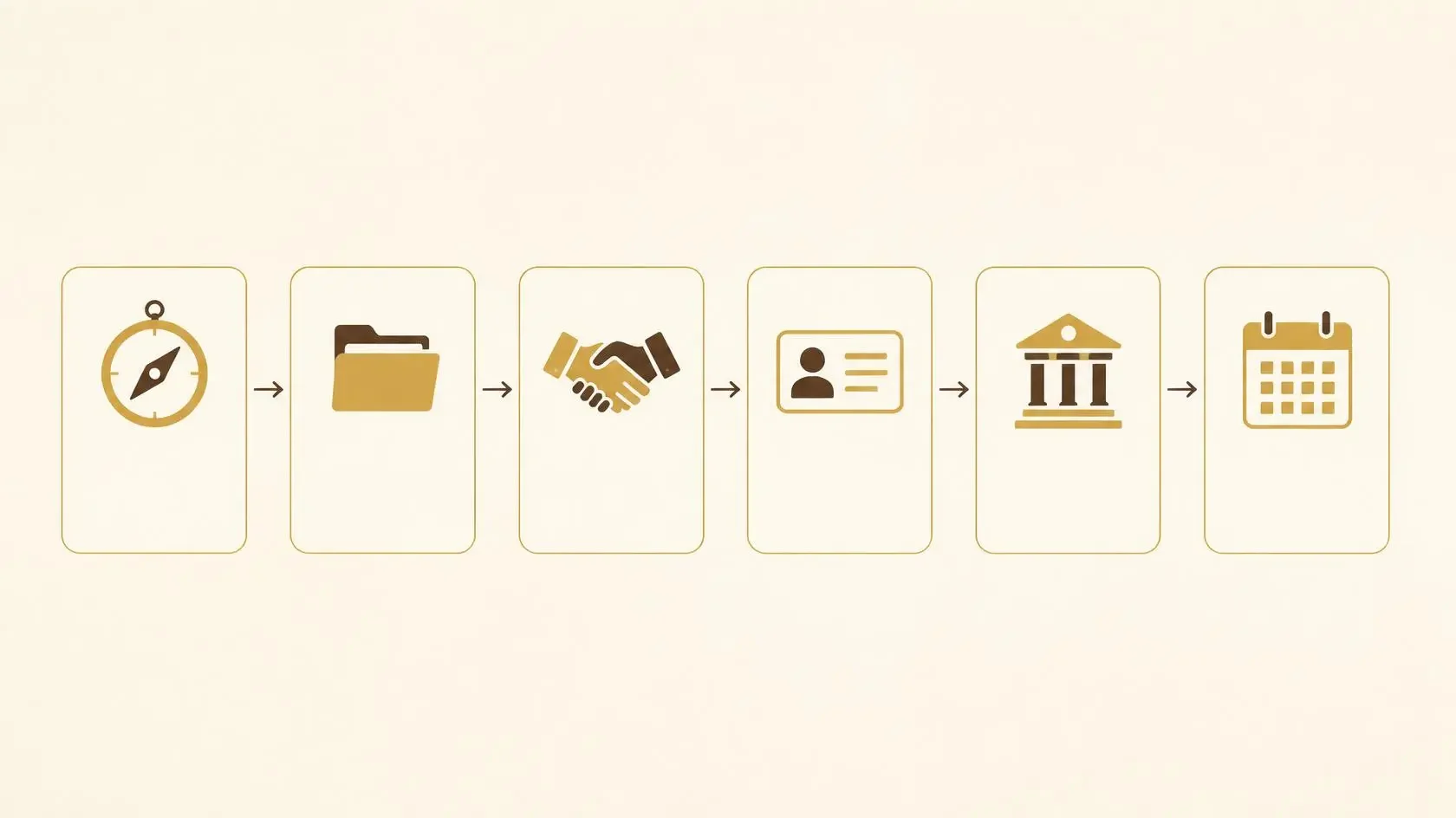
Plan the company before buying the package
Send PrimeRegister a short description of your business, the owners' countries of residence, your preferred state and any US operations. Contact us to discuss formation, and review current pricing alongside the scope of services.
The goal is to leave the process with a company you can operate and maintain, a clear set of records and a calendar you understand.