Business Operations
Can One LLC Have Multiple Businesses? Brands and Risks
Can one LLC have multiple businesses? Often, one LLC can conduct more than one lawful activity or operate multiple brands, subject to its governing documents and applicable rules. But two brand names inside one company are not automatically two separate liability compartments.
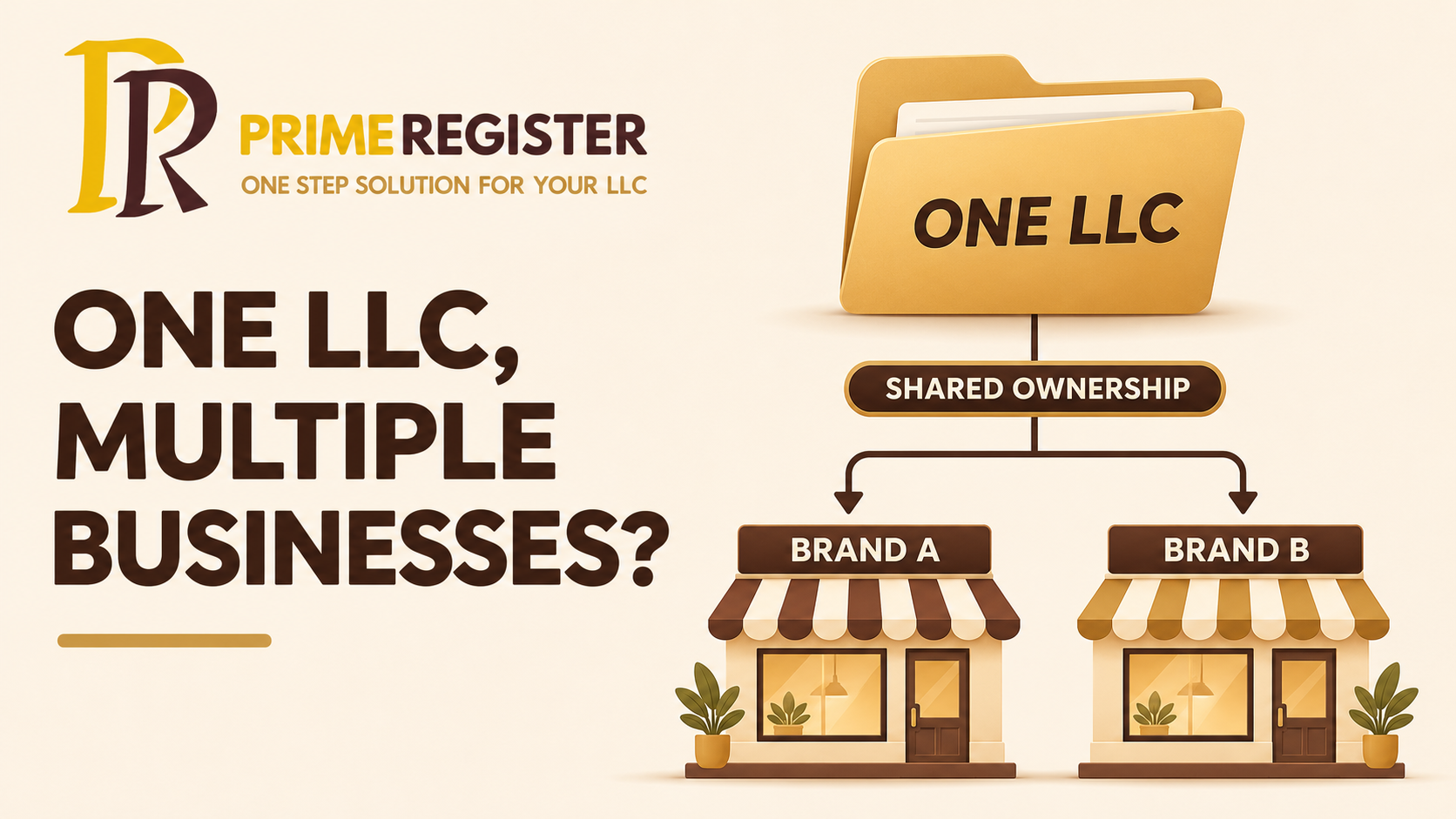
Can one LLC have multiple businesses? Often, one LLC can conduct more than one lawful activity or operate multiple brands, subject to its governing documents and applicable rules. But two brand names inside one company are not automatically two separate liability compartments.
The useful decision is whether the activities should share the same legal owner, risks, partners and records. Saving a second filing fee may be sensible in one situation and expensive in another.
Can one LLC have multiple businesses under different names?
A DBA or trade name can identify a business under a name different from its legal entity name. Registration requirements depend on location. The SBA explains the distinction between an entity name, DBA, trademark and domain name. SBA business-launch guidance.
Do not confuse naming with entity formation. Our DBA versus LLC guide explains why registering another name does not itself create another company.
Check the scope of the company
Review the operating agreement, existing contracts, licenses and insurance. A new activity may require approvals or changes even if the state filing allows a broad business purpose.
Check whose business it is
If one activity has a different partner or investor, ask how ownership and profits will be documented. A shared legal entity can make a supposedly separate venture more complicated than expected.
Compare one entity with separate entities
| Issue | One LLC with multiple activities | Separate LLCs |
|---|---|---|
| Administration | One entity to maintain, with internal tracking | More entity-level maintenance |
| Ownership | Shared entity ownership needs careful allocation | Ownership can be structured separately |
| Contracts | Same legal company may sign for different brands | Each entity signs its own agreements |
| Risk planning | Activities sit within one legal entity | Separation still requires proper implementation |
| Sale of a business line | Assets and contracts need careful identification | Entity-level sale may be an option, subject to review |
This is a planning comparison, not a promise that separate LLCs prevent every claim. Guarantees, conduct and other facts can affect exposure.
Example: consulting and physical products
Imagine a consultant adds an online store selling physical goods. Both activities use different brand names, but the same LLC signs the contracts and receives the revenue.
The store introduces supplier, shipping and product issues that the consulting work did not have. Before combining them, the owner should review contracts, insurance, tax registrations and whether the same structure still fits. The answer should be based on the changed business, not just the convenience of an existing EIN.
Keep the customer-facing information clear
Contracts and invoices
Identify the legal contracting party and any trading name consistently. Customers and suppliers should understand which entity is responsible. Avoid using one company's documents for an unrelated entity.
Payment and banking accounts
Tell providers about the real activities and brands. An account approved for consulting should not silently become an account for an unrelated restricted product. Use our banking preparation guide to organize the supporting records.
Books and management reports
Use separate categories or reporting dimensions for each activity so you can see revenue, costs and performance. Separate bookkeeping categories improve clarity; they do not themselves create legal separation.
When a second entity deserves serious review
Consider professional advice when activities have substantially different risks, owners, investors or sale plans. Also review regulated activities before adding them to a general company. The applicable state and industry requirements control.
Before creating another LLC, price the whole year: formation, registered agents, renewals, accounting, tax work and banking administration. A structure should be sustainable after the excitement of launching the second brand.
Document the decision before expanding
Write down who owns each activity, which entity signs contracts, where income goes and who maintains the records. Update your operating agreement and business records where appropriate.
If a separate US company fits the plan, contact PrimeRegister about formation. If one company remains appropriate, focus on accurate names, permissions and records rather than treating a new logo as a new legal business.
Research checked 7 November 2026. General information, not individual legal or tax advice. Check current official requirements before acting.