Payments and Marketplaces
LLC for Dropshipping: Setup, Payments and Seller Duties
An LLC for dropshipping can provide a business structure for your store, but it does not make the supplier responsible for every problem your customers experience. You still need a workable sales process, accurate shipping promises, reliable suppliers and a plan for refunds and disputes.
An LLC for dropshipping can provide a business structure for your store, but it does not make the supplier responsible for every problem your customers experience. You still need a workable sales process, accurate shipping promises, reliable suppliers and a plan for refunds and disputes.
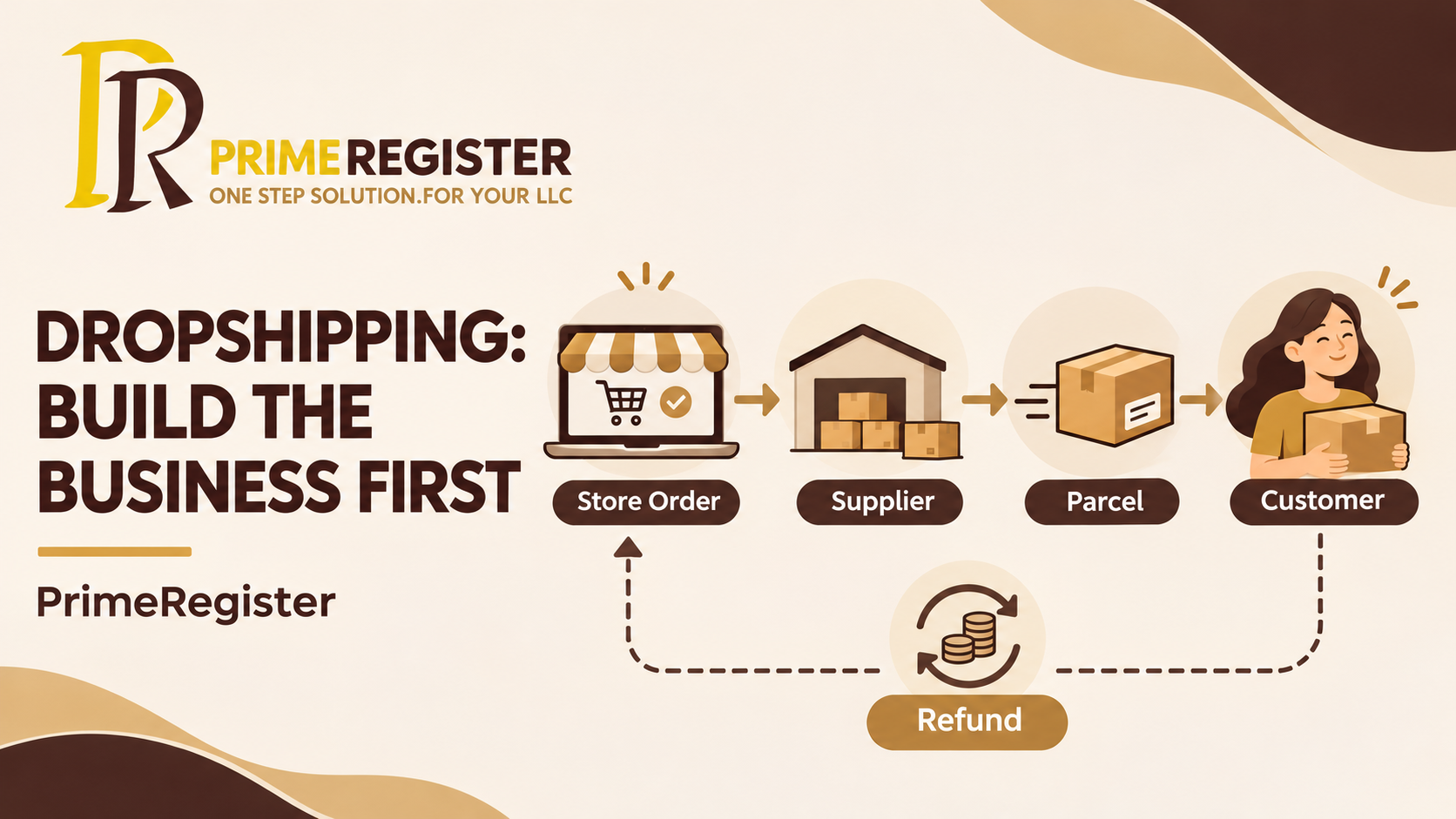
Before choosing a state, map one complete order: who takes the customer's money, who buys the goods, who ships them and who responds when something goes wrong. That map is more useful than a generic claim that dropshipping needs only a website and an LLC.
LLC for dropshipping: what formation changes
Formation creates the company through which you intend to operate. It does not certify your products, approve your payment account or confirm that your supplier can deliver. Treat those as separate launch decisions.
Settle ownership and authority
If two founders run the store, decide who owns it, contributes cash and signs supplier agreements. Record the arrangement before revenue arrives. Our LLC operating-agreement guide explains the questions to resolve.
Identify the seller customers are dealing with
Keep the legal seller, store brand, invoices and customer terms consistent. A brand can differ from the entity name, but customers should not receive conflicting explanations of who sold the product.
Your shipping promise needs evidence
The FTC's merchandise-order rule requires a reasonable basis for advertised shipping times. If no time is stated, the general rule uses 30 days. If shipment cannot occur on time, the rule addresses obtaining agreement to a delay or providing a prompt refund. Read the details before setting store policies. FTC shipping-rule business guide.
Do not copy “three-day delivery” from a competitor if your supplier has not demonstrated it. Test the actual route, including order processing and any relevant import steps. Keep evidence of supplier communications and customer notices.
Check the supplier before advertising
| Question | Useful evidence |
|---|---|
| What will the customer receive? | Samples and accurate specifications |
| How quickly can it ship? | Tested processing and shipping timelines |
| What happens after a defect? | Written replacement and refund arrangements |
| Who answers a product complaint? | A named contact and escalation process |
| Who handles cross-border delivery? | Clear allocation of shipping and import tasks |
This is a commercial review checklist, not a substitute for product-specific compliance advice. Some products require specialist review before any sale.
Check payment eligibility before a marketing launch
A store can be technically live while its payment setup is incomplete. Verify your actual product, fulfillment model, country and business details with the provider. Keep enough cash to cover supplier costs and refunds without assuming each customer payment is immediately available.
Our Shopify Payments guide explains why a US LLC does not override identity or operating-address requirements. For another processing route, see Stripe for non-US residents.
Calculate the margin after the difficult orders
Start with the customer price, then subtract product cost, shipping, platform charges, advertising, expected refunds and support costs. Run a second scenario with slower delivery and higher returns. An apparently profitable product can fail once a campaign scales.
Keep transactions traceable
Give each order an identifier that connects the customer payment, supplier purchase, tracking information and any refund. Reconcile gross sales and fees separately. A single monthly net payout will not explain which orders lost money.
Review tax and registration questions by location
Where stock is held, where the supplier ships from and where customers receive goods can matter. Do not infer a nationwide tax exemption from an LLC's state. Start with our sales-tax guide for non-resident owners, then review the relevant jurisdictions.
Form the company around a tested operating plan
Choose the ownership structure and state after checking the supplier, payment route and ongoing budget. Contact PrimeRegister for formation assistance once those facts are clear. Formation can organize the business; it cannot replace reliable fulfillment or erase customer obligations.
Research checked 7 November 2026. General information, not individual legal or tax advice. Check current official requirements before acting.