Business Operations
LLC Holding Company: Structure, Costs and Practical Limits
An LLC holding company is an LLC used to hold assets or ownership interests, often in other companies. It is a role in a business structure, not a special label that automatically produces tax savings or complete asset protection.
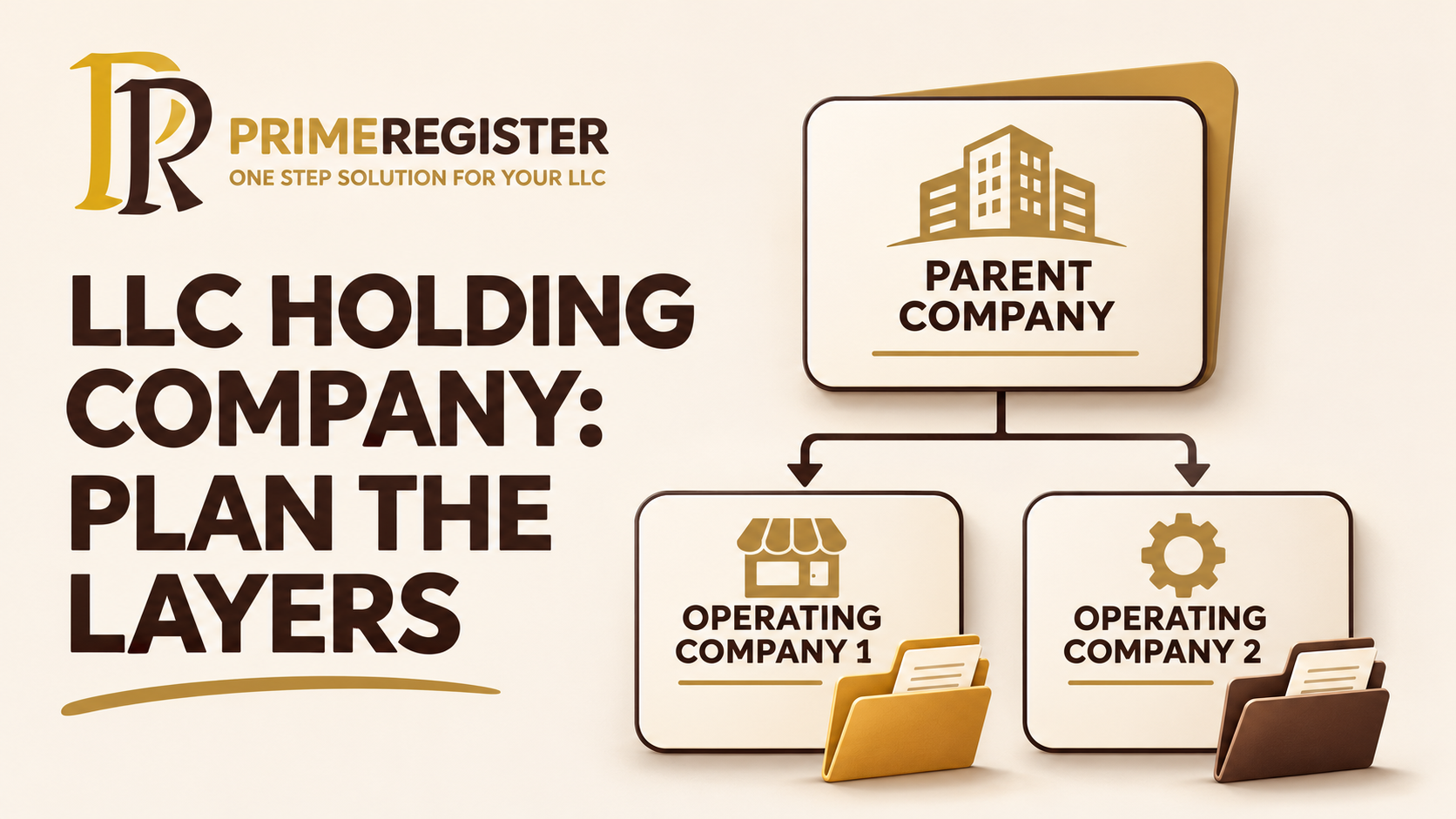
An LLC holding company is an LLC used to hold assets or ownership interests, often in other companies. It is a role in a business structure, not a special label that automatically produces tax savings or complete asset protection.
Before forming one, identify what it will own, why ownership should sit there and how the operating businesses will interact with it. A diagram is useful only if the contracts, accounts and records follow the same structure.
What an LLC holding company actually does
State law and the governing agreement determine what the entity can do. Delaware, for example, defines persons eligible within its LLC framework broadly enough to include entities, including domestic and foreign companies. That is a state-law example, not a universal recommendation to form in Delaware. Delaware LLC definitions.
Holding interests in operating companies
A parent may own interests in one or more subsidiaries that carry on day-to-day business. Record which entity owns each interest and who has authority to act for it.
Holding other assets
Some structures place particular assets in a separate entity. Transfers and use arrangements can have legal, tax, financing and insurance consequences. Do not move valuable assets based on a generic internet diagram.
Compare the structure with a simpler alternative
| Question | Why it matters |
|---|---|
| What problem is being solved? | Avoid paying for entities with no clear purpose |
| Who owns each layer? | Ownership and control must be documented |
| Which entity signs contracts? | Customers and suppliers need the correct counterparty |
| How does money move? | Transfers need a real explanation and records |
| What must be maintained? | Each relevant entity can add recurring work |
If your objective is only to use two brands, a holding structure may be more elaborate than necessary. Start by clarifying the business requirement and compare alternatives with advisers.
Legal structure and federal tax classification are separate
An LLC's tax classification depends on its ownership and elections. Adding a holding company does not automatically create a single tax result for all the entities in a group. The IRS describes the basic classification framework. IRS LLC classification.
Our LLC tax-classification guide explains the starting point. Cross-border owners should also review the home country's treatment before creating additional layers.
Make the diagram match the business
Contracts
Use the correct legal party for customer, supplier, licensing and service arrangements. An operating company should not casually use its parent's contract template with the wrong name left in place.
Accounts and transfers
Keep transactions attributable to the proper entity. Label transfers according to their actual purpose, supported by appropriate records. Repeated unexplained movements make accounting and ownership reviews harder.
Decisions and records
Document approvals and maintain the records required for each company. Our LLC business-records guide can help organize the folders, but a group's intercompany arrangements need a tailored review.
Do not assume the structure guarantees protection
Separate entities do not make every guarantee, wrongful act or contractual obligation disappear. The way the business operates matters. Ask a lawyer to review the intended separation, insurance and any personal or parent guarantees before relying on the structure.
For example, if a parent promises to pay an operating subsidiary's debt, the existence of two LLCs does not make that promise meaningless. Review the actual agreements, not only the ownership chart.
Budget for the layers you will maintain
Include formation, registered-agent services, state maintenance, accounting, banking and professional review for the relevant entities. Compare those costs with the commercial benefit you expect. A structure that cannot be maintained reliably may create more confusion than value.
Use our US LLC cost guide as a starting framework, then obtain a group-specific estimate. Contact PrimeRegister for formation assistance after the ownership and tax plan has been reviewed. The objective is an understandable, workable structure—not the largest possible number of companies.
Research checked 7 November 2026. General information, not individual legal or tax advice. Check current official requirements before acting.