Company Documents
LLC Name vs Trademark: Protecting Your Business Brand
LLC name vs trademark is a distinction every founder should understand before buying packaging, domains or advertising. State approval of a company name does not, by itself, provide federal trademark registration or establish that the brand is safe to use for your products.
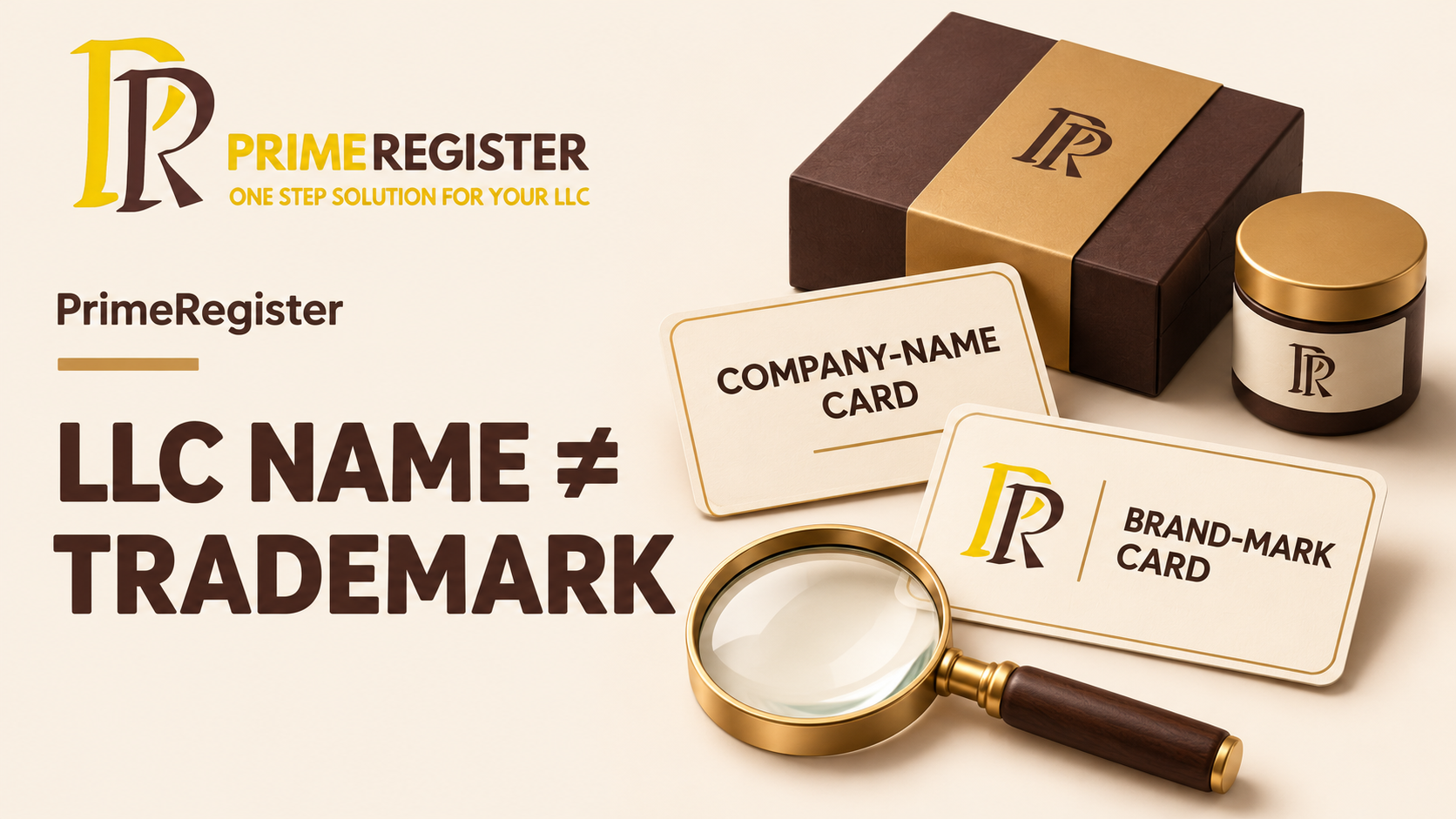
LLC name vs trademark is a distinction every founder should understand before buying packaging, domains or advertising. State approval of a company name does not, by itself, provide federal trademark registration or establish that the brand is safe to use for your products.
Treat formation and brand clearance as related but separate tasks. A name can pass an entity-name check while still raising trademark concerns in the market where you plan to trade.
LLC name vs trademark: what each identifies
An entity name identifies the company in its formation records. A trademark identifies the source of particular goods or services. Federal registration can provide important rights and benefits, but the scope depends on the mark and the covered goods or services. USPTO trademark-registration overview.
Our LLC name-search guide covers the formation side. Do not treat an available domain name as a substitute for either check.
The legal company name
Use it accurately in contracts, official records and financial applications. If the business trades under another name, review the relevant assumed-name requirements.
The customer-facing brand
Decide whether you are protecting words, a logo or another identifier. A redesigned logo and an unchanged business name may raise different filing and use questions. Get advice before assuming that one registration covers every future version.
Search before committing to the brand
The USPTO's trademark process begins with evaluating the mark and searching for potentially conflicting marks. Registration is not automatic merely because an application is submitted. USPTO trademark process.
A practical preparation file includes the proposed mark, products or services, intended markets, current use and any similar names you found. A professional clearance review can consider more than an exact spelling match.
Decide who should own the application
The individual founder and the LLC are different potential owners. Establish the correct owner before filing. If design or branding work was commissioned before formation, review the underlying agreements and ownership history rather than assuming every right moved automatically to the company.
| Question | Record to prepare |
|---|---|
| Who owns the brand? | Entity and ownership documents |
| What does it identify? | Actual goods or services |
| How is it used? | Relevant examples of genuine commercial use |
| Who created the assets? | Design and assignment agreements where applicable |
| What markets matter? | Current and planned customer locations |
Foreign-domiciled applicants need a US attorney
The USPTO requires foreign-domiciled trademark applicants and registrants to be represented by a US-licensed attorney. For an entity, domicile concerns its principal place of business, not simply its formation state. A US LLC or registered-agent address does not necessarily make an overseas-run company US-domiciled. USPTO foreign-domicile rule.
Do not provide an address that misrepresents the actual headquarters to avoid the requirement. Ask a qualified trademark attorney to establish the correct applicant and domicile from the facts.
Separate legitimate assistance from a filing promise
Verify who is providing legal advice
Ask for the responsible attorney's identity and credentials when legal representation is required. A formation service and a trademark lawyer perform different roles.
Understand what the quote includes
Clarify searching, application preparation, government fees, responses to issues and later maintenance. A low initial filing price may not describe the complete process.
Keep account and deadline access organized
Save official correspondence and identify who monitors deadlines. Do not assume that registering the LLC means someone is monitoring trademark matters for you.
Build a consistent brand and company record
Use the correct entity name, trading name and mark across your website, contracts and payment applications. Our DBA versus LLC guide and company-records guide help organize those distinctions.
Contact PrimeRegister for company-formation questions, and obtain trademark advice for clearance, ownership and registration. Doing the name work before a major launch can prevent a much more disruptive rebrand later.
Research checked 7 November 2026. General information, not individual legal or tax advice. Check current official requirements before acting.