EIN and IRS Records
New EIN for an LLC: When Changes Require Review
A new EIN for an LLC is not required simply because the business changes its name, moves its address or updates a contact. Structural and ownership transactions require a more careful review. The correct answer depends on the entity's federal classification and what legally happened to the business.
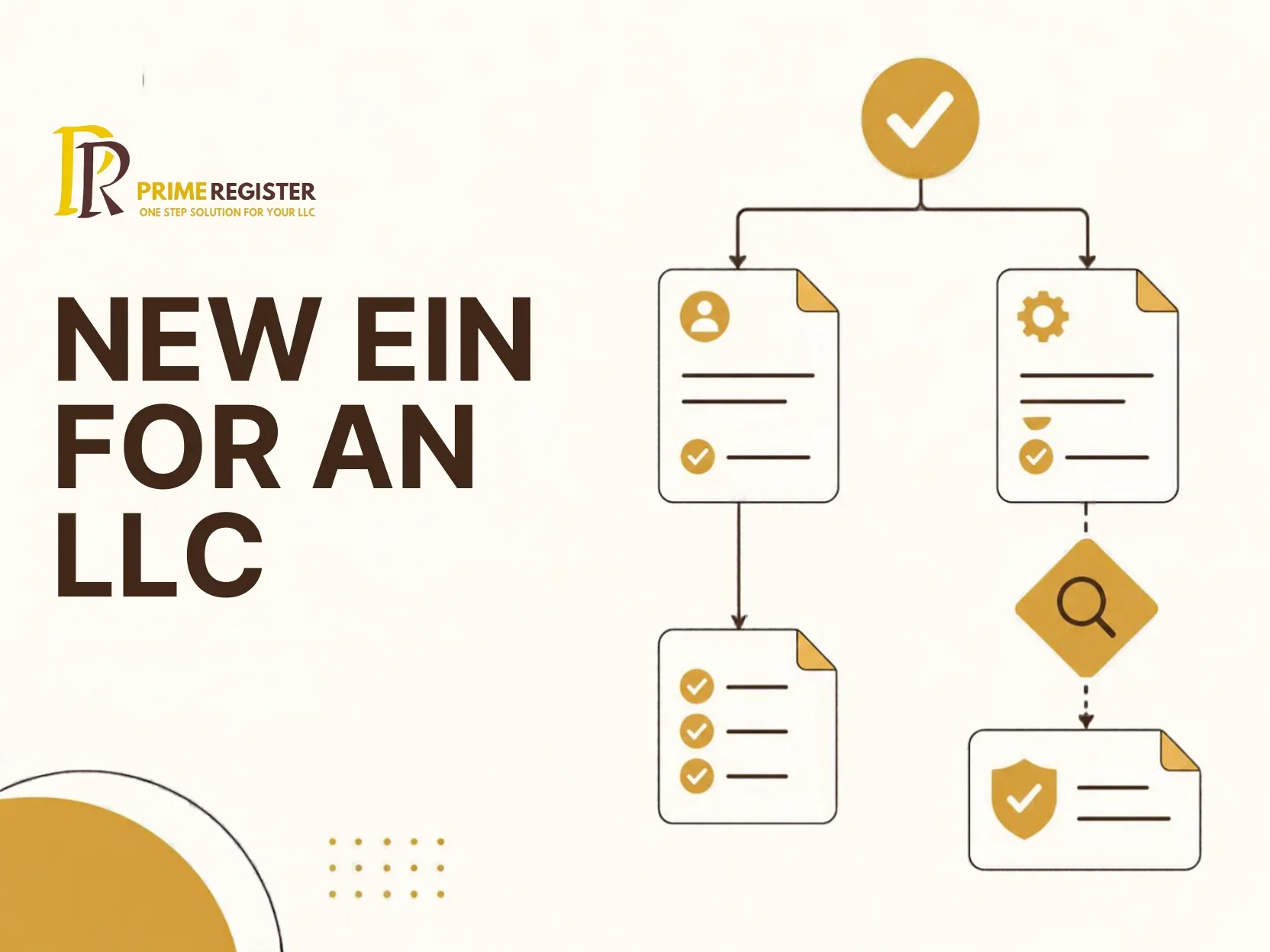
A new EIN for an LLC is not required simply because the business changes its name, moves its address or updates a contact. Structural and ownership transactions require a more careful review. The correct answer depends on the entity's federal classification and what legally happened to the business.
The IRS new-EIN guidance gives separate rules for LLCs, partnerships and corporations. Read the category that matches the actual tax treatment rather than relying on the broad statement that ownership changes always need another number.
New EIN for an LLC: separate routine updates from transactions
| Change | Starting point |
|---|---|
| Legal name only | Update the name; generally keep the EIN |
| Address only | Update the address; generally keep the EIN |
| Responsible party | Notify the IRS through the appropriate update |
| Existing LLC elects corporate or S treatment | IRS guidance says the election alone does not require a new EIN |
| Entity ends and a new entity is created | Assess a new EIN for the new entity |
| Members are added or removed | Review classification and transaction-specific rules |
This table is a triage tool, not permission to use one identifier across unrelated companies. Keep a clear record of which legal entity owns each EIN.
Do not solve a document problem by reapplying
If you lost the EIN confirmation, obtain appropriate evidence of the existing number. The EIN confirmation letter guide explains that process. Applying again can create duplicate records and make bank verification harder.
For a name change, use the IRS name-update route. For an address or responsible-party change, review Form 8822-B. Neither is an application for a replacement business identity.
Examine ownership changes carefully
A partnership ownership change that does not terminate the partnership does not automatically require a new EIN under the IRS guidance. A single-member LLC becoming multi-member, or a partnership becoming a sole-owner business, raises different questions.
The SS-4 instructions address applications following classification changes. Give the adviser the old and new owner counts, percentages, effective date, tax elections and whether the transaction was an interest sale, redemption or new entity formation.
Our adding a member guide explains why the underlying transaction should be documented before the identifier question is answered.
Handle employees and separate tax purposes correctly
A disregarded LLC can be treated as separate for employment or excise tax purposes. If it needs its own EIN for those responsibilities, do not assume the owner's sole-proprietor identifier is sufficient.
Foreign-owned US disregarded entities also need their own EIN for applicable Form 5472 reporting. The tax classification guide explains why disregarded status does not remove every separate filing duty.
Keep a decision record
Save the IRS rule relied on, professional advice where obtained, transaction documents and any update confirmation. If a new EIN is required, coordinate banks, payroll and tax accounts so old and new periods are not mixed.
Contact PrimeRegister to discuss administrative EIN assistance once the entity and transaction facts are established. Complex ownership changes should be reviewed by the tax professional responsible for the filings.
If the reviewed transaction calls for a genuinely new company, review our LLC formation gig on Fiverr (IncorpoDesk) for formation support and confirm any EIN-related scope separately. Do not form another entity simply to replace or correct an existing EIN.