Annual Reports and Compliance
California LLC Annual Report: The Biennial Filing Rule
What many owners call a California LLC annual report is the Statement of Information. For an LLC, it is generally required within 90 days of formation or registration and every two years afterward. The filing fee is $20. Corporations have different reporting schedules, so do not apply a corporation's annual rule to your LLC.
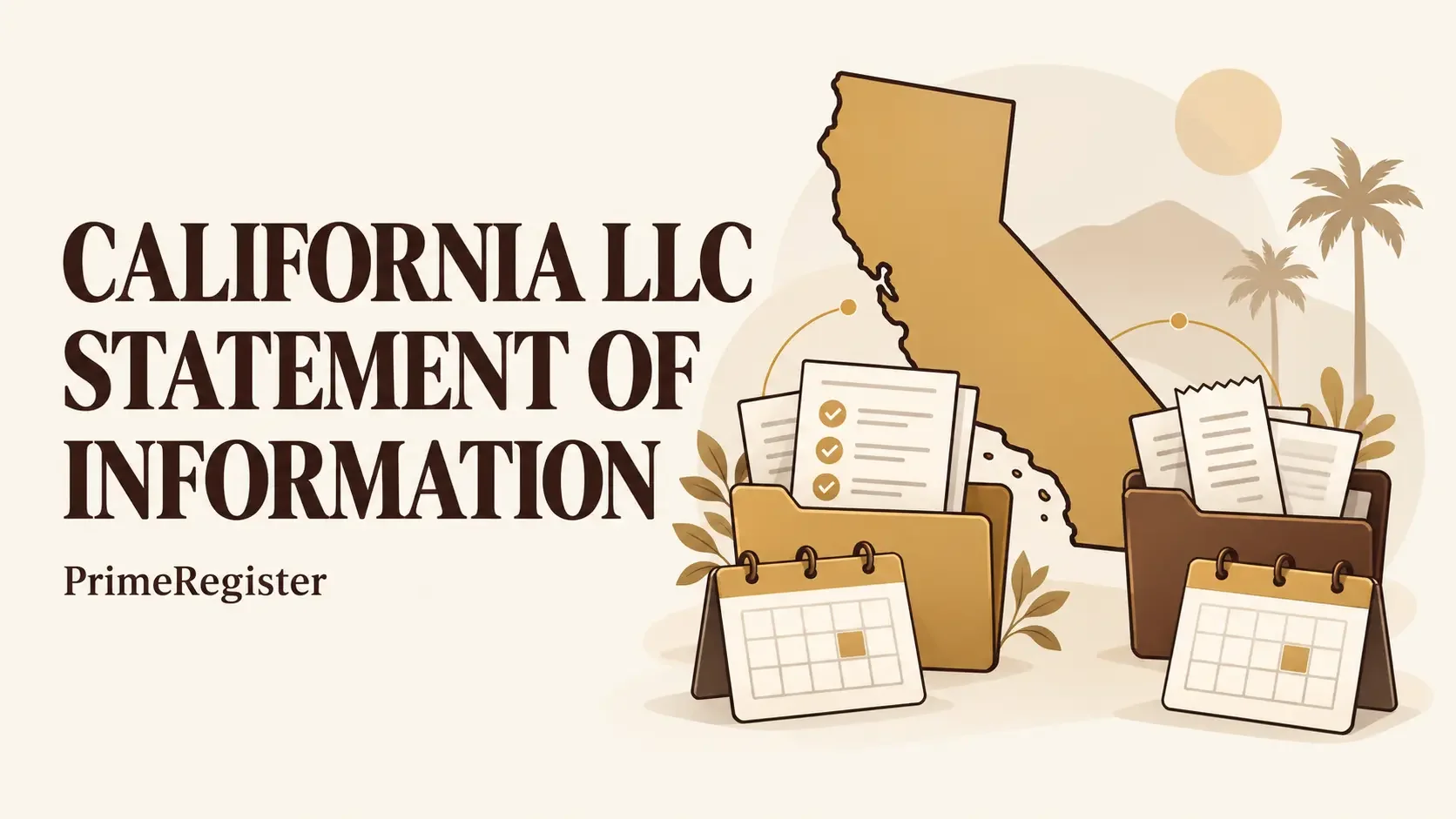
What many owners call a California LLC annual report is the Statement of Information. For an LLC, it is generally required within 90 days of formation or registration and every two years afterward. The filing fee is $20. Corporations have different reporting schedules, so do not apply a corporation's annual rule to your LLC. California Secretary of State FAQ.
This filing is also separate from California's annual LLC tax. The similar recurring paperwork can be confusing, but the agencies, purposes and deadlines differ.
California LLC annual report: what the statement covers
The Statement of Information records company details such as addresses, agent information and the management information required for the LLC. Check the current Secretary of State forms and instructions for the correct filing option.
| Task | Agency and purpose |
|---|---|
| Initial Statement of Information | Secretary of State; initial company information |
| Biennial statement | Secretary of State; recurring company record update |
| LLC annual tax and tax return | Franchise Tax Board; separate tax obligations |
| Local licenses | Relevant local authority; business activity permissions |
Find the correct filing window
Begin with the original formation or California registration date. The recurring cycle uses the relevant anniversary month and odd- or even-year pattern. Check the filing window and next due period on the official entity record before submitting.
An initial statement is not postponed until the next two-year cycle. For a newly formed company, set the 90-day reminder immediately after approval. The California LLC formation guide places that task alongside the other launch steps.
If the business was formed in another state, the California foreign registration guide is the relevant starting point. A foreign registration still carries California reporting responsibilities.
Review the fields rather than copying old answers
Confirm the company name and entity number, actual addresses, registered agent and applicable managers or members. Check the business activity description against what the company actually does.
Where a no-change filing is available, use it only when the eligibility conditions are met and the previously filed information remains correct. Do not select it merely to save time when an address or agent has changed. Keep the accepted statement and a note identifying what was reviewed.
Do not confuse filing acceptance with tax compliance
The California state tax filing guide explains the separate $800 annual-tax framework and income-based LLC fee. Paying $20 to the Secretary of State does not pay those amounts. Conversely, a tax payment does not update a missing Statement of Information.
If the company is suspended or has missing filings, examine the reasons shown by the relevant agencies before deciding how to restore it. If the business is closing, use the California LLC closure guide; simply stopping statements or tax payments is not the same as completing cancellation.
For an active company, retain the accepted statement, check the next due period and assign someone to monitor official notices throughout the two-year interval.
Keep this checklist with your company records. If you are planning a new LLC alongside these decisions, contact PrimeRegister to discuss the formation paperwork and service scope.