Tax and Compliance
Can a Non-Resident Own an S Corp? Eligibility Explained
Can a non-resident own an S corp? A nonresident alien cannot be a direct S corporation shareholder under the ordinary eligibility rules. However, “non-resident” in everyday conversation may refer to citizenship, an overseas address or residence outside a state. Those are not automatically the federal tax status used for this rule.
Can a non-resident own an S corp? A nonresident alien cannot be a direct S corporation shareholder under the ordinary eligibility rules. However, “non-resident” in everyday conversation may refer to citizenship, an overseas address or residence outside a state. Those are not automatically the federal tax status used for this rule.
Before considering an S election, determine who owns the business and each owner's relevant US tax status. Do not start with a payroll calculator and assume every foreign founder qualifies.
Can a non-resident own an S corp under IRS rules?
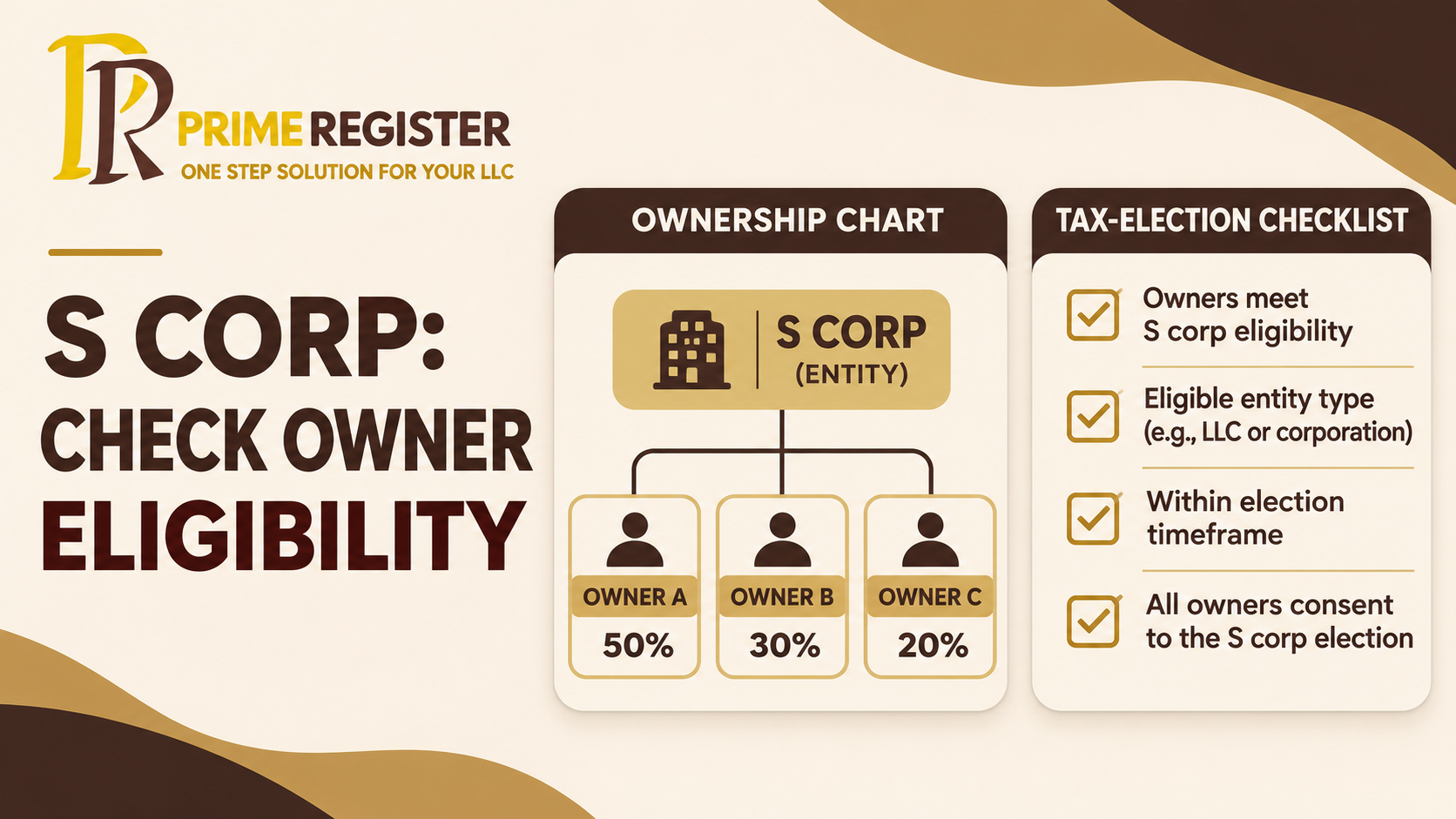
The IRS limits S corporations to eligible shareholders and excludes nonresident alien shareholders, partnerships and corporations. It also imposes other conditions, including a shareholder limit and a one-class-of-stock requirement. IRS S corporation eligibility.
The direct-owner restriction is the relevant starting point for a founder considering an ordinary personally owned business. Specialized trust arrangements require separate professional analysis; they are not a simple workaround for an ineligible direct owner.
Citizenship is not the whole test
A non-US citizen may be a US resident alien for tax purposes. Conversely, owning an American company does not make someone a US tax resident. The IRS describes nonresident status by reference to the green-card and substantial-presence tests, with further rules and exceptions. IRS nonresident-alien guidance.
An EIN does not change the owner's status
The company's tax identification and the owner's eligibility answer different questions. Obtaining a number is not evidence that an S election is available. Our ITIN versus EIN guide explains which taxpayer each number identifies.
An LLC and S corporation treatment are different concepts
An LLC is a state-law structure. S corporation treatment is a federal tax election for an eligible entity. The IRS explains that LLC tax treatment depends on ownership and elections. IRS single-member LLC guidance.
Our LLC tax-classification guide explains the broader choices. Do not assume that selecting “LLC” on a state form also elects S corporation taxation.
Review the ownership chain before filing anything
| Ownership fact | Why it needs checking |
|---|---|
| Individual owners | Relevant tax status must be established |
| Company owner | Ordinary corporations and partnerships are not eligible shareholders |
| Planned investors | A later ownership change may affect continuing eligibility |
| Ownership rights | Economic arrangements must be reviewed against election requirements |
Prepare the operating agreement, ownership register and any proposed investment documents. An adviser cannot reliably evaluate eligibility from the business's public trading name alone.
Do not choose an election only for a claimed tax saving
Compare administrative work
Ask about accounting, payroll where applicable, return preparation and ongoing eligibility monitoring. A savings estimate that ignores administration is incomplete.
Compare cross-border consequences
Your home country may treat the structure differently. Request a two-country review before changing classification. A result that looks attractive on a US-only spreadsheet may not remain attractive after local treatment is considered.
Consider future ownership
If a foreign company or another ineligible investor may join later, discuss that plan before making an election. Correcting a structure after investment documents are signed can be more disruptive than selecting appropriately at the start.
What to do if someone already submitted an election
Collect the submitted forms, IRS correspondence, filing dates and ownership facts. Ask a qualified tax professional to establish whether the election was valid and what corrective steps, if any, are required. Do not ignore a problem or assume that receiving correspondence proves every eligibility condition was satisfied.
For another structure comparison, see our LLC versus C corporation guide. If you are still planning the company, contact PrimeRegister for formation questions and obtain tax advice before selecting an election. The right order is eligibility first, then a comparison of consequences.
Research checked 7 November 2026. General information, not individual legal or tax advice. Check current official requirements before acting.