
LLC Changes and Closure
LLC Address Change: A Complete Update Checklist
An LLC address change can involve several different records: principal office, mailing address, registered office, owner residence and tax correspondence. Updating one does not automatically update the others. Begin by identifying which address changed and which organizations hold that information.
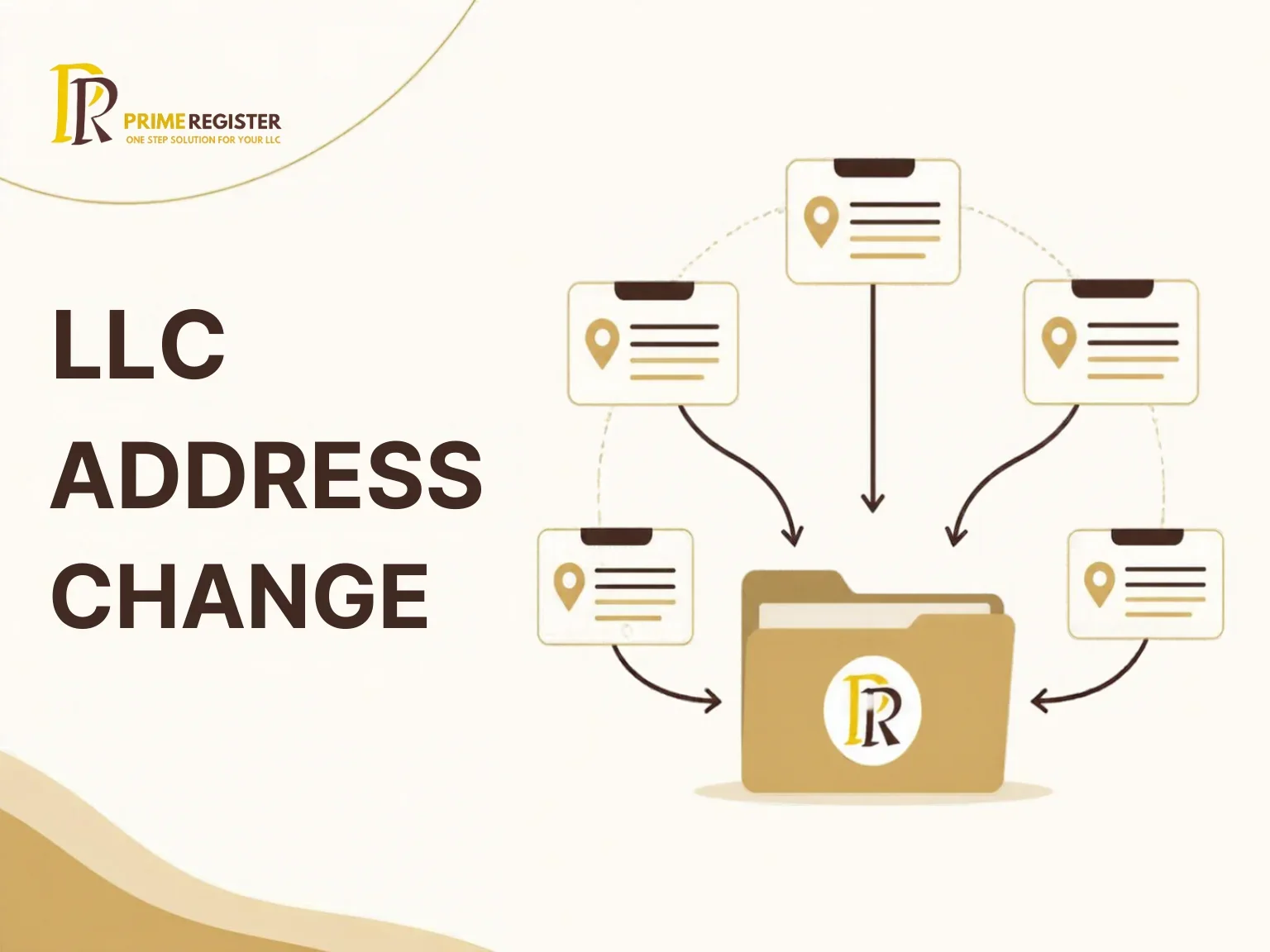
An LLC address change can involve several different records: principal office, mailing address, registered office, owner residence and tax correspondence. Updating one does not automatically update the others. Begin by identifying which address changed and which organizations hold that information.
A move is also a chance to review whether the business will operate in a new jurisdiction. Changing a mailing address alone is different from moving staff, inventory or an office into another state.
LLC address change: identify the field first
| Address | What it usually describes |
|---|---|
| Principal office | Main business office under the relevant filing rules |
| Mailing address | Where correspondence is sent |
| Registered office | Qualifying location for statutory notices |
| Owner residence | Personal address used for identity or tax purposes |
| IRS business address | Address used for applicable federal records |
Our business address versus agent address guide explains why a single rented address may not satisfy all five purposes. Answer each agency's field accurately.
Update the state entity record
Check the formation state's filing menu. Some address changes use a dedicated update form; others use an annual report, amendment or another document. For example, Virginia's forms page provides separate principal-office and registered-agent routes.
If the registered agent also changes, coordinate acceptance and coverage before ending the old service. Use the registered agent switching guide for that handoff. Postal forwarding alone does not update the statutory record.
Check additional states where the LLC is registered. A change at the formation state does not necessarily update those foreign registrations.
Notify the IRS correctly
Form 8822-B is used for business address or responsible-party changes under its instructions. Review which fields apply and retain submission evidence. The specific 60-day notification rule applies to a responsible-party change; do not assume every address update follows that same wording.
Our Form 8822-B guide covers the federal form in detail. An address change alone generally does not require a new EIN.
Update banks, licenses and counterparties
Contact the bank and payment providers using their approved update process. They may request new address evidence or review whether the new location is supported. Do not upload an altered utility bill or official document to resolve a mismatch.
Update tax accounts, insurance, licenses, contracts and invoices where required. Keep the website's contact and legal information accurate. Record each update in a simple tracker with the submission date and confirmation.
Review a move across state or national borders
Suppose an LLC changes from a home office in one state to a warehouse and staff in another. That is more than a postal update. It can create foreign-registration, payroll, licensing and tax questions.
If you want to change the LLC's legal home state, read LLC domestication. Do not dissolve the existing entity before deciding the correct route. An owner's international move can also change personal tax residence and bank eligibility without changing the LLC's formation state.
Contact PrimeRegister with the old and new address types and formation state to discuss administrative updates. Obtain tax and legal advice where the move changes actual operations.
If the move also involves a genuinely separate new company, review our LLC formation gig on Fiverr (IncorpoDesk) for its formation. Booking a new company registration does not update the addresses or registrations of an existing LLC.