LLC Changes and Closure
LLC Domestication: Moving the Legal Home State
LLC domestication changes an LLC's legal home jurisdiction through a process permitted by the relevant laws. It is different from foreign qualification, which registers the existing LLC to do business in another state while retaining its original legal home.
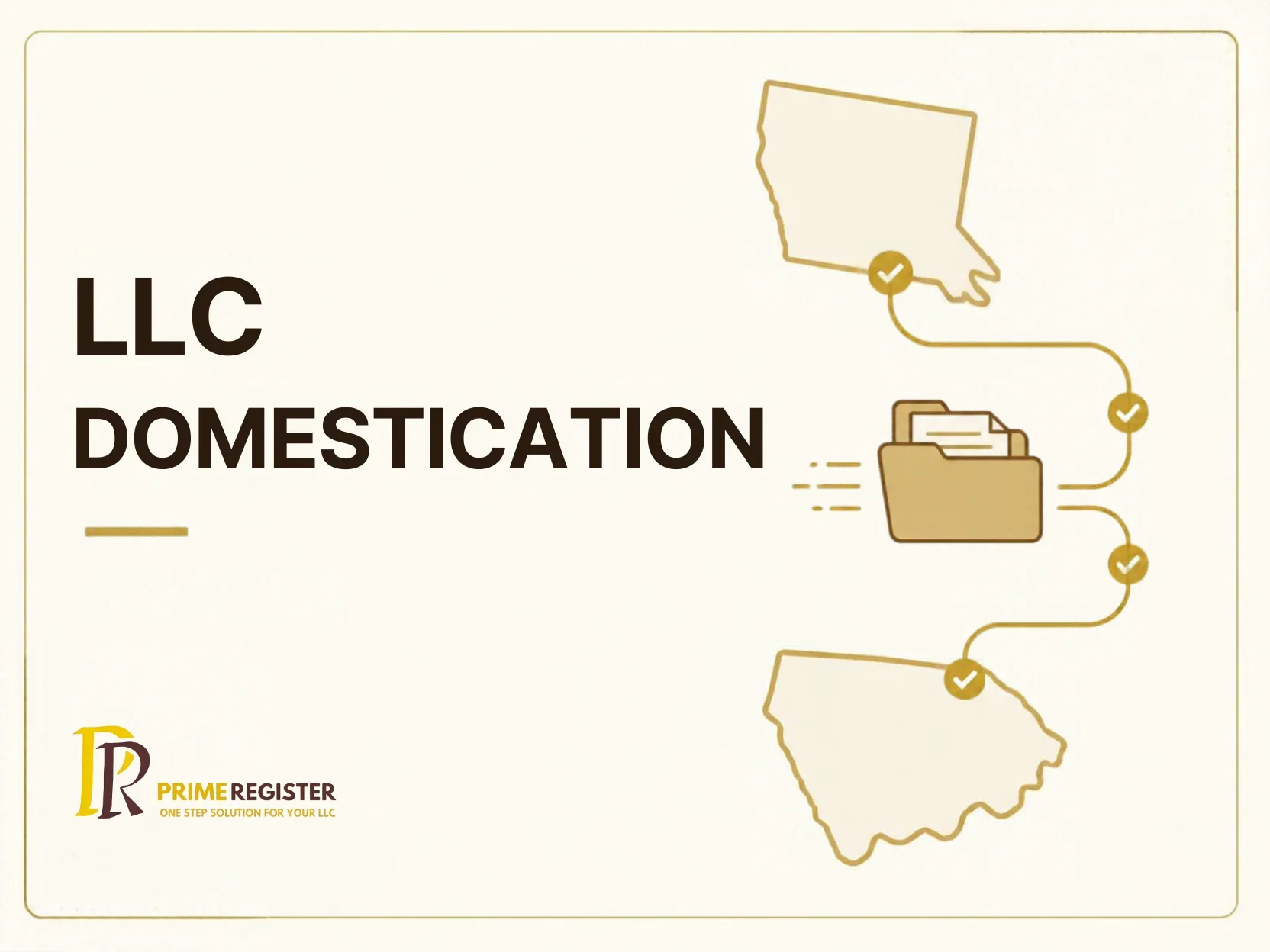
LLC domestication changes an LLC's legal home jurisdiction through a process permitted by the relevant laws. It is different from foreign qualification, which registers the existing LLC to do business in another state while retaining its original legal home.
Not every state pair offers the same route. Some laws use terms such as conversion or continuation, and the required documents differ. Do not dissolve the original LLC before confirming a coordinated plan.
LLC domestication versus other options
| Route | What it generally does |
|---|---|
| Foreign qualification | Adds authority to operate in another state |
| Domestication | Changes the governing formation jurisdiction where permitted |
| Statutory conversion or merger | Uses another legal transaction route under applicable law |
| New formation and asset transfer | Creates a separate entity and transfers specified business assets |
The Virginia SCC domestication guidance provides a useful example: Virginia allows LLC domestication in either direction when the other jurisdiction also permits it. Its guidance does not establish availability for every other state pair.
Start with both jurisdictions
Identify the current state, intended destination and the reason for moving. Review both states' statutes, filing instructions and status requirements. Ask whether the intended route preserves the entity's continuity and what approvals are needed.
Virginia's domestication form guide, for example, requires confirmation that the transaction is permitted under the original jurisdiction's law and that those requirements have been met. This is more than changing a mailing address.
Prepare the plan and approvals
Review the operating agreement, lender covenants, leases and material contracts for approval or notice requirements. Prepare the required plan, member consents, destination articles and coordinated filing sequence with counsel.
Keep the existing registered agent and entity status maintained until the plan allows the relevant service or registration to end. An interrupted notice address can create problems while filings are pending.
Our LLC address-change guide is useful if only operational addresses are changing. It should not be used as a substitute for a legal-jurisdiction change.
Review tax identity and ongoing operations
Ask the tax adviser how the transaction is treated and whether the EIN continues under the actual facts. Do not assume that every move requires a new number or that every domestication preserves it without analysis.
Moving the legal home does not necessarily end obligations in the former state. If staff, inventory or an office remain there, the company may need foreign qualification or continuing tax accounts. Read foreign qualification before assuming the former state can be removed from the compliance calendar.
Complete the handoff across records
After acceptance, save both jurisdictions' evidence. Update banks, insurance, licenses, tax agencies, contracts and the internal agreement as required. Check the public records to confirm that the intended transaction occurred on both sides.
For example, a founder moving personally may need only address and tax-residence updates, while a business moving all operations may need a broader reorganization. The legal route should follow those facts.
Contact PrimeRegister to ask what administrative support is available for the specific states. Use legal and tax advisers to establish the transaction and its consequences before filing.
If your advisers choose a separate new formation instead of domestication, review our LLC formation gig on Fiverr (IncorpoDesk) for the registration work. Do not order a standard formation package expecting it to transfer the existing LLC between states.