Tax and Compliance
LLC Owner Draws vs Salary: Start with Tax Classification
LLC owner draws vs salary cannot be answered from the letters LLC alone. The company's federal tax classification determines the starting point. A sole owner of a disregarded LLC, a partner in an LLC taxed as a partnership and an owner working for a corporation can have different payment and reporting rules.
LLC owner draws vs salary cannot be answered from the letters LLC alone. The company's federal tax classification determines the starting point. A sole owner of a disregarded LLC, a partner in an LLC taxed as a partnership and an owner working for a corporation can have different payment and reporting rules.
Begin with the LLC tax classification guide. Then identify what each payment actually represents before moving money or setting up payroll.
LLC owner draws vs salary: the basic framework
| Tax treatment | General starting point for an individual owner |
|---|---|
| Single-owner disregarded LLC | Owner withdrawals are generally not wages paid to oneself |
| LLC taxed as partnership | Partners are generally self-employed, not employees of the partnership |
| LLC taxed as corporation | Working officers or owners may have employee compensation obligations |
The IRS paying-yourself guidance explains the distinction between corporate officers and partners. S corporation owner-employees also have reasonable-compensation requirements; distributions are not a blanket substitute for wages.
A draw does not determine taxable profit
Withdrawing money and earning taxable income are separate events. An owner can have a tax obligation based on income allocated or attributed to them even if the cash stays in the business. Conversely, the tax treatment of a distribution can depend on basis and other rules.
For an LLC taxed as a partnership, the IRS partnership publication explains distributions, allocations and guaranteed payments. Do not treat every partner payment as either a wage or a tax-free withdrawal without review.
Label outgoing payments accurately
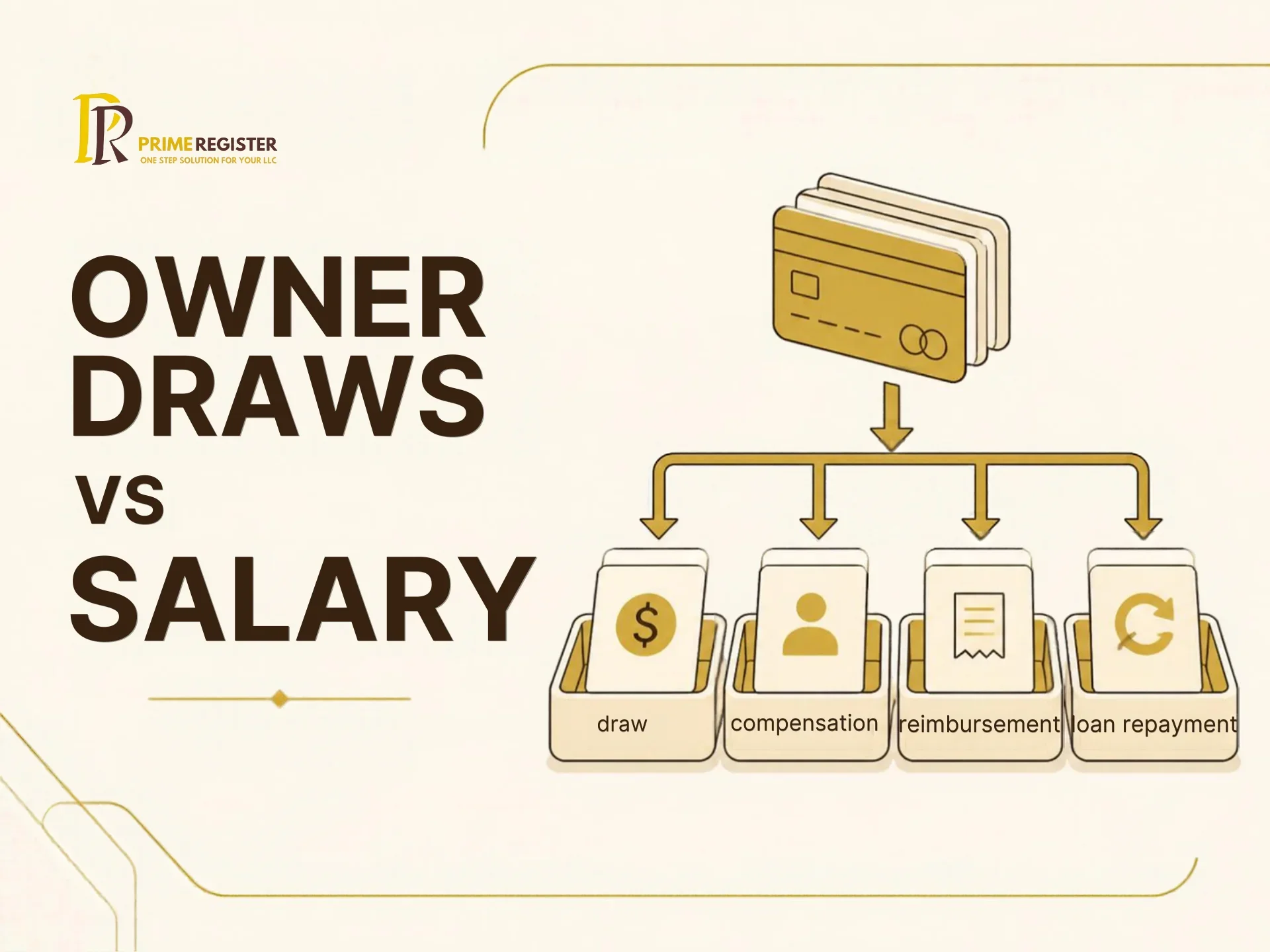
Separate owner distributions, compensation, expense reimbursements, loan principal and interest. Keep approval and supporting records. A transfer memo saying salary does not make a payment valid payroll, just as writing loan repayment does not establish that a genuine loan existed.
Use the contributions versus loans guide to connect outgoing payments to the original funding records. Avoid paying personal expenses directly from the company account without identifying the correct treatment.
Review foreign-owner reporting separately
For a foreign-owned US disregarded LLC, an owner withdrawal can matter for Form 5472 reporting even where income-tax rules disregard the owner-entity transaction. The Form 5472 instructions should be applied to the actual transactions.
For a partnership with foreign partners, withholding may depend on allocable effectively connected taxable income rather than cash distributions. Read the foreign-partner filing guide before assuming that leaving profits in the company avoids withholding.
Do not elect S status simply to use a salary strategy
S corporation eligibility has restrictions, including the general prohibition on nonresident alien shareholders. The IRS S corporation guidance is the starting reference. A US address or EIN does not make an ineligible owner eligible.
An election also changes administration and can have consequences outside the US. Obtain a comparison based on your facts rather than a generic promised savings amount.
Set a written payment routine
Agree with the preparer which payment categories to use, what documentation is needed and when withholding or payroll applies. Reconcile the accounts monthly and reserve cash for taxes and business commitments.
Contact PrimeRegister for formation administration questions. Use a qualified tax or payroll professional to implement owner compensation and reporting for the chosen classification.
For a company that has not yet been established, review our LLC formation gig on Fiverr (IncorpoDesk) for registration support. Owner compensation, payroll and tax-classification advice need a separately agreed professional scope.