Tax and Compliance
LLC Annual Report vs Tax Return: Two Separate Duties
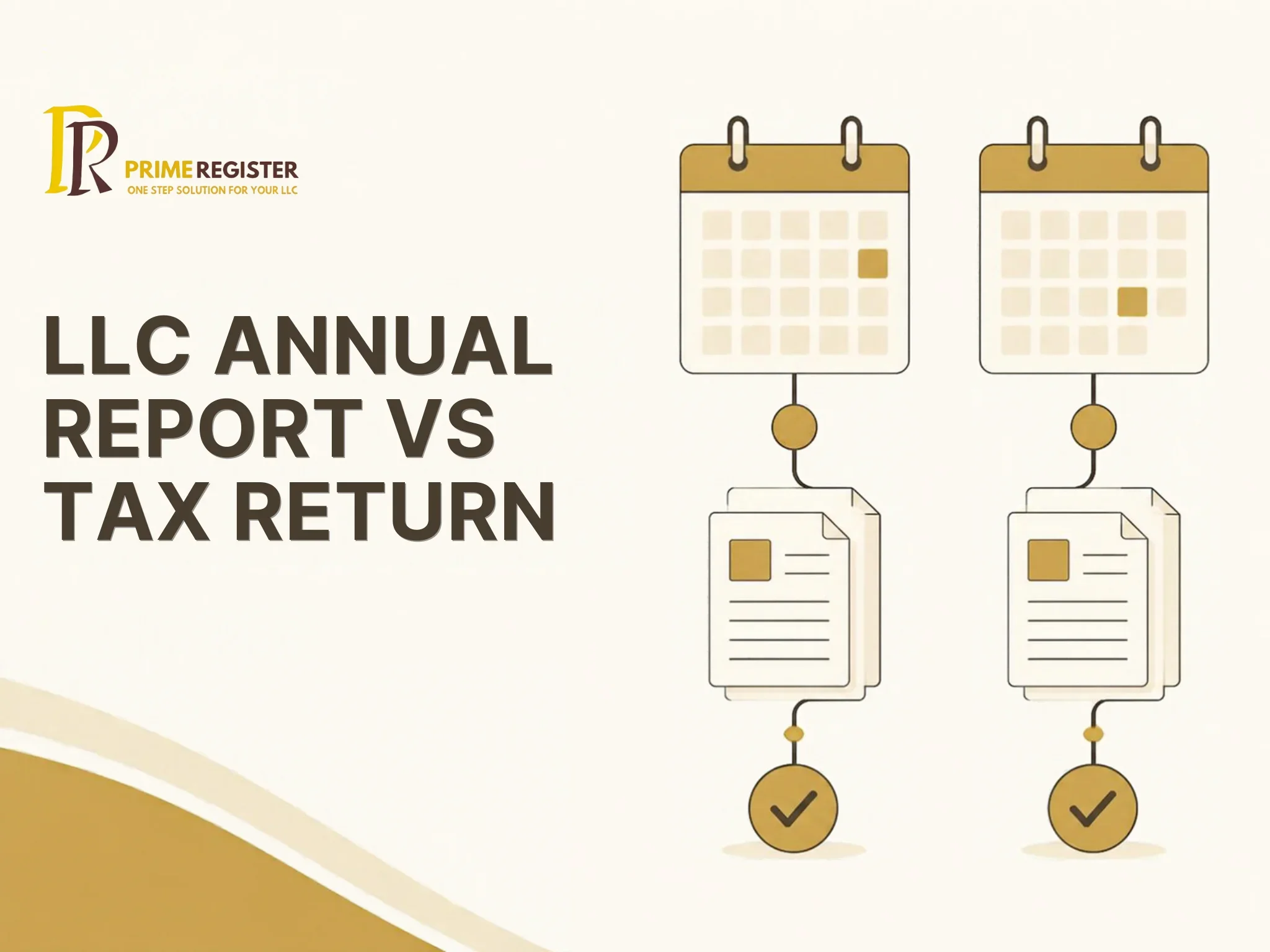
LLC annual report vs tax return is a distinction between maintaining an entity's state record and reporting tax information. An annual report commonly updates addresses, agents or management details. A tax return reports income, deductions, transactions or other information under the applicable tax rules.
LLC annual report vs tax return is a distinction between maintaining an entity's state record and reporting tax information. An annual report commonly updates addresses, agents or management details. A tax return reports income, deductions, transactions or other information under the applicable tax rules.
Paying for one service does not prove that the other task is complete. Some states use terms such as annual certificate, periodic report or annual registration fee instead of annual report.
LLC annual report vs tax return: compare the purpose
| Question | State entity report or fee | Tax return or information filing |
|---|---|---|
| Main purpose | Maintain the entity record or required status | Report tax-related information and liabilities |
| Typical authority | Secretary of State or equivalent office | IRS and relevant state or local tax agencies |
| Timing | State-specific annual, biennial or other schedule | Classification, tax year and form-specific schedule |
| Evidence | Accepted report or payment confirmation | Filed return, acceptance or mailing evidence |
| No revenue | May still be required | Requires a separate filing assessment |
The Pennsylvania annual report guidance, for example, sets an ordinary LLC September 30 deadline. Virginia's LLC fee guidance uses an anniversary-based payment rule. Neither determines the federal return deadline.
First identify your state obligation
Check the formation state and every state where the LLC is registered. Record the filing name, due date, fee and responsible person. A company can have more than one state entity task.
An ordinary Ohio LLC has no routine Secretary of State annual report, while other states require recurring filings. That does not establish that an Ohio business has no taxes or licenses. See the Ohio formation guide for the distinction.
Then identify the tax classification and forms
The IRS entity guidance explains the default classifications for domestic LLCs. A single-owner disregarded entity, partnership and corporation can have different returns and information filings.
A foreign-owned disregarded LLC may need Form 5472 with a pro forma Form 1120 for reportable transactions. A multi-member LLC taxed as a partnership may need Form 1065 and foreign-partner withholding work. Read LLC tax classification before selecting a tax-service package.
Ask providers what their service actually includes
“Annual compliance” can mean reminders, state report preparation, filing, tax preparation or a combination. Ask for the exact forms and agencies, who submits them and what completion evidence you receive.
For example, a $25 state annual certificate payment does not pay for preparation of a federal information return. A tax preparer may not monitor the registered agent inbox. Assign each responsibility explicitly.
Build one calendar with separate lines
Use a tracker with columns for agency, filing, period covered, deadline, extension if available, payment and acceptance evidence. Add reminders before the due date and verify completion afterward.
An extension for one tax form does not automatically extend a state report, tax payment or other return. Our Form 7004 guide explains a specific federal extension route and its limits.
Contact PrimeRegister to ask which administrative tasks its service covers. Share the entity's state and classification with the relevant tax professional so the filing calendar covers both workstreams.
If you are still at the formation stage, review our LLC formation gig on Fiverr (IncorpoDesk) and ask which ongoing tasks, if any, the package covers. Keep annual reports and tax-return preparation separately identified in your service plan.