International LLC Formation
US LLC from Canada: Registration and Local Checks
Planning a US LLC from Canada? Start by checking the ownership, business activity and home-country position before ordering the US registration.
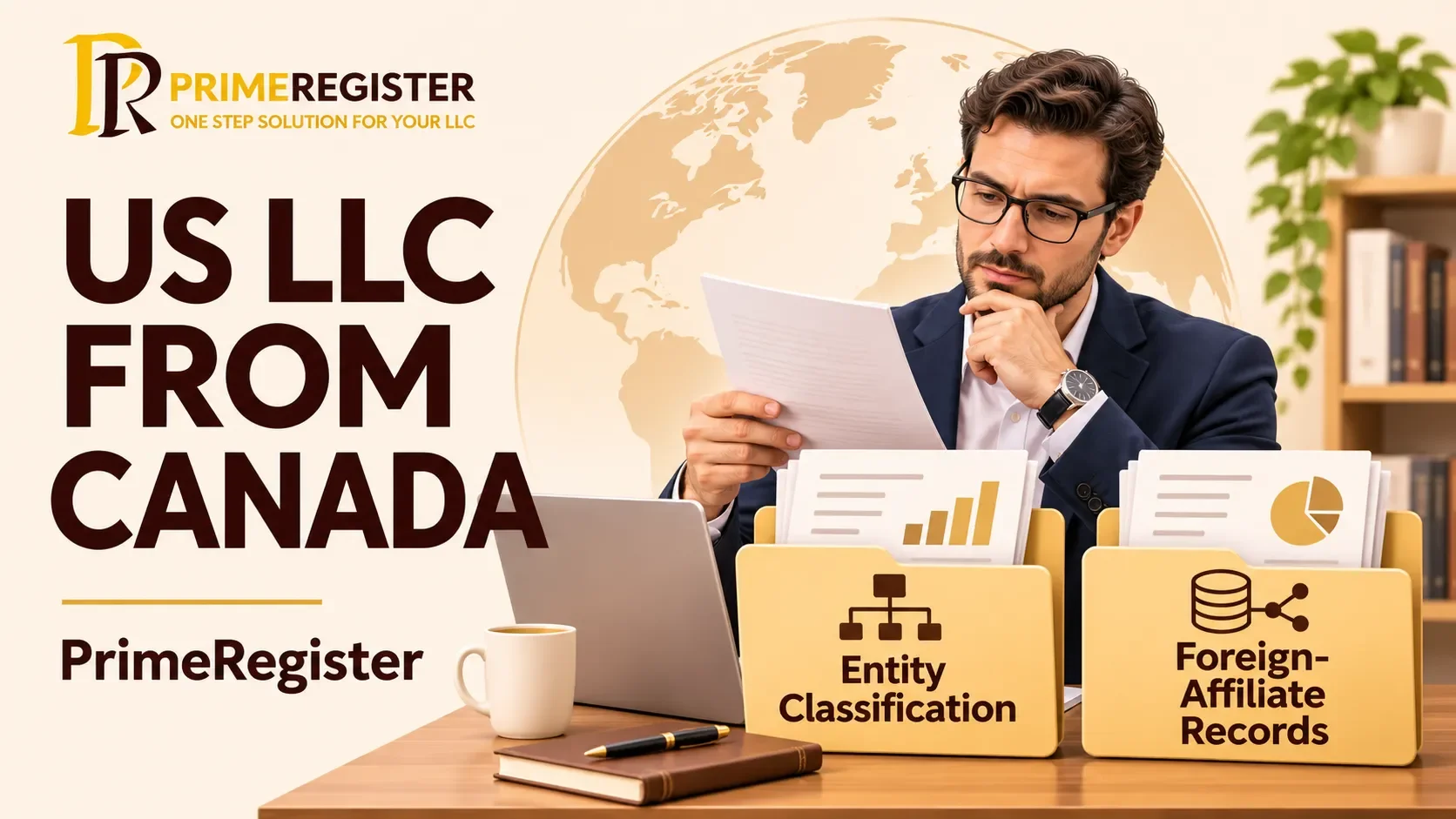
Planning a US LLC from Canada? Start by checking the ownership, business activity and home-country position before ordering the US registration. For a Canadian founder, the main LLC decision often concerns tax classification rather than access to US formation. Canadian and US treatment may differ, and that difference can affect how profits, distributions and foreign taxes are reported. Review the proposed structure before you choose an LLC over a corporation or your existing Canadian business.
Check the classification before considering tax savings
CRA's historical technical guidance discusses US LLCs as corporations for Canadian purposes in the situations examined. It is archived guidance, so use it as a warning about a possible mismatch, not as a current ruling on every state law and operating agreement. Archived CRA LLC discussion.
Ask a Canadian cross-border adviser how the proposed LLC will be treated today. Supply the operating agreement, ownership chain and intended US classification. If the two countries recognise income at different times or in different taxpayers, foreign tax credit relief may require more than showing that US tax was paid.
Do not assume that a default US pass-through election or classification produces the same Canadian result. The practical question is the after-tax and administrative result for your complete structure.
Review foreign-affiliate reporting separately
CRA provides detailed guidance on Form T1134 for foreign affiliates, including conditions and exceptions. Whether the form applies depends on the actual ownership and circumstances; forming any US LLC does not automatically create an identical filing package for every Canadian. CRA T1134 questions and answers.
Ask the adviser which foreign-affiliate, foreign-property or other reporting applies and how the categories interact. Avoid a generic checklist that tells everyone to file every international form without checking eligibility or exclusions.
Keep the ownership percentages, acquisition dates, related-owner details, financial statements and distributions in one file. These facts can be needed even when the company has only modest revenue.
Decide whether you or your Canadian company should own it
A Canadian individual buying an LLC interest is not the same arrangement as a Canadian corporation creating a subsidiary. Make that decision before completing a provider's owner field.
If an existing Canadian business will sell services, inventory or intellectual property to the US entity, describe those transactions in written agreements and consistent accounting records. Determine which entity is the actual seller to the customer.
For founders who only need to receive US-dollar payments, first compare available payment options for the Canadian business. A US entity should be chosen because the complete business case supports it, not because “USD account” and “US LLC” sound like the same product.
Example: a Toronto ecommerce business
Suppose a Toronto company plans to hold stock in an American warehouse and sell through a US entity. The owners review the LLC's Canadian classification, the subsidiary ownership structure, customs responsibilities and the US states affected by the inventory.
They also identify who owns the goods at each stage. A formation in one state does not answer sales-tax, registration or filing questions created by activities in another. The ecommerce LLC guide helps organise that operational review.
Banking and border crossings are separate matters
Ask the banking provider about its requirements for Canadian owners, genuine addresses and expected transactions. Approval is an individual provider decision.
If you plan to travel to perform work in the US, obtain the appropriate immigration advice. Owning the company is not the same as permission to work physically in the United States. Do not build a launch plan around the assumption that the incorporation document resolves travel status.
The same structure review applies in Toronto, Vancouver, Montreal and elsewhere. Your province, business activities and residence facts may affect local obligations, but city-specific US formation pages would not replace that analysis.
US LLC from Canada: the registration sequence
Once the structure and local checks are settled, work through these steps in order:
- Select the US entity and state. Account for actual operations, investors and continuing costs.
- Confirm the name and registered agent. Use accurate details and the official state filing process or a clearly scoped service.
- Obtain the accepted formation document. Check the effective date and legal name before using them elsewhere.
- Document ownership and management. Prepare an operating agreement matching the real members and their contributions.
- Apply for the EIN. Use the appropriate IRS route and genuine responsible-party information. The EIN application guide explains the no-SSN question.
- Apply for financial services. Use the provider's current eligibility and documentation requirements; approval is separate from incorporation.
- Assign ongoing responsibilities. Establish bookkeeping, state renewals, relevant US filings and the local work identified in the country review.
For the full US process, use the non-resident LLC registration guide. Check the first-year and renewal cost guide before comparing packages. Avoid comparing a state-only filing price with a quote that includes agent service and other work.
Keep a launch file for both countries
Save the ownership chart, formation record, agreement, EIN confirmation, banking correspondence, invoices and funding evidence. Add a short explanation of where the people, management and operations are located.
Record owner contributions and withdrawals as carefully as customer payments. Share the complete file with the preparers handling the respective jurisdictions. If facts change after launch, such as a new member or a US employee, review the plan again rather than assuming the original advice covers the change.
This guide was researched on 5 November 2026. Confirm the rules and provider requirements for the actual transaction date, especially for a launch planned in 2027.
For help with the US formation paperwork, contact PrimeRegister. Share the owner country, business activity and intended state so the service scope can be confirmed. If you prefer ordering formation assistance on Fiverr, review the formation gig and confirm its current inclusions before purchase. Home-country tax and investment advice should be arranged with an appropriately qualified adviser.