Company Documents
Certificate of Formation vs Operating Agreement
Certificate of formation vs operating agreement is a comparison between a state formation record and an internal governance document. The state filing establishes the LLC under the applicable law. The operating agreement sets out how the owners and managers run the company and share its economic rights.
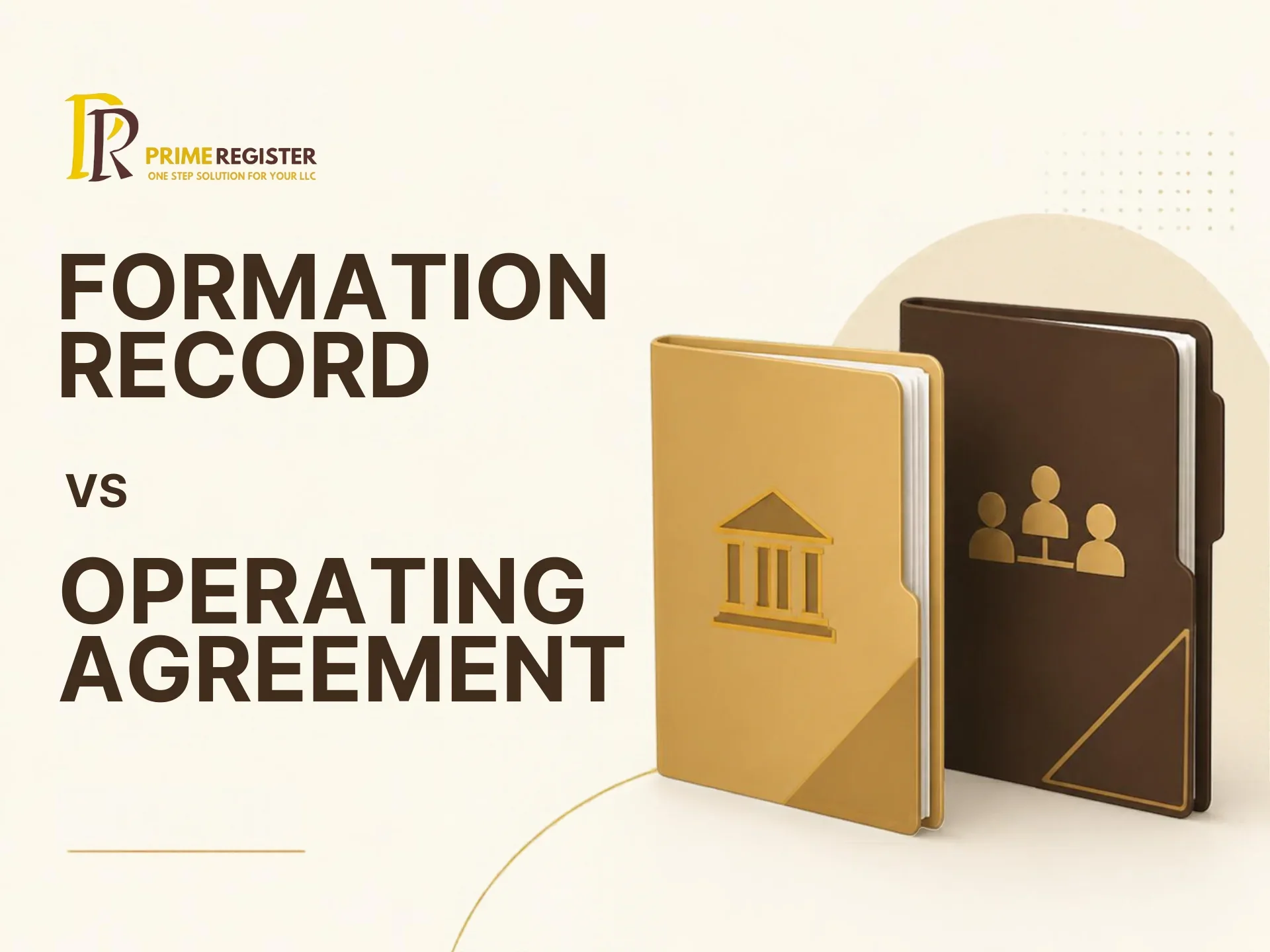
Certificate of formation vs operating agreement is a comparison between a state formation record and an internal governance document. The state filing establishes the LLC under the applicable law. The operating agreement sets out how the owners and managers run the company and share its economic rights.
Names vary by state. Articles of organization and certificate of organization can serve the formation-document role. Do not assume two documents are interchangeable merely because both contain the company name.
Certificate of formation vs operating agreement: the distinction
| Question | Formation document | Operating agreement |
|---|---|---|
| Where does it go? | Filed with the state agency | Generally kept internally |
| What does it address? | Required public formation information | Ownership, management and internal rules |
| Who accepts or agrees to it? | State filing office accepts the filing | Relevant parties adopt or agree to the terms |
| How is it updated? | Required state amendment or update route | Appropriate internal approval and amendment |
| Is it proof of current good standing? | Not necessarily | No |
New York's formation guidance illustrates the distinction clearly: articles are filed with the state, while the required written operating agreement is not filed with the Department of State. Other states have their own requirements.
What the formation record does not tell you
An accepted certificate shows the state filing, but it may not list every owner or explain ownership percentages. It also may not establish who can approve a loan, how profits are allocated or what happens when a founder leaves.
An older formation document does not necessarily prove the company is currently in good standing. If a recipient asks for current status evidence, see the certificate of good standing guide.
What the operating agreement adds
The agreement can define member and manager authority, contributions, voting, distributions, transfer restrictions and exit arrangements, subject to governing law. It should reflect the actual deal rather than contain blank percentages or names copied from another business.
For a single-owner company, it can still document management and operational arrangements. For multiple owners, it helps resolve questions that a short state filing cannot answer. Our operating agreement guide provides a preparation checklist.
Why a bank may ask for both
A bank may use the state record to verify the entity and the internal agreement to understand ownership or authority. It can also request identification, EIN evidence and other records. Requirements vary by institution and application.
If the bank asks for a certified copy of the formation document, sending a signed operating agreement may not meet the request. Ask for the exact document name and format; read certified LLC documents before ordering.
Keep the two records consistent
Compare names, management provisions and effective dates. If a later amendment changes the legal name, preserve it with the original certificate and update the internal agreement as appropriate. Do not edit accepted state documents yourself.
Create separate State and Governance folders in the business records system. Contact PrimeRegister if you need help identifying formation documents within an administrative service package. Use legal advice for agreement terms that affect owner rights.
For a new registration, review our LLC formation gig on Fiverr (IncorpoDesk) and ask exactly which formation documents the package delivers. Confirm separately whether any operating-agreement support is included and obtain legal advice for tailored owner terms.